
First a little business. If you are enjoying reading this journal, there are going to be several more installments. Please feel free to follow the “blog.” It’s usually a button you click at the end of this post. I feel goofy even calling it that, like I’m some hip 30-something who knows what a barista is and doesn’t wear cargo shorts for the storage capacity. Nevertheless, it can make it easier to share and this way you can be on top of the African adventure.
So there is something that I would like to address regarding guides and firearms. First, they are not necessary in all parks at all times, but I would suggest that they are very necessary sometimes. It is critically important to understand the relationship between the guides and the animals. They truly love these creatures, a fact made evident not only in the career they have selected and for which they have trained extensively, but in how they speak of the beasts of the bush. It is clear that they are passionate about the well-being and preservation of these wild beings. And that is the key. Wild beings. Sometimes, things happen and not all of it is nice and neat. As Kingsley says, “Mrs. Jones doesn’t speak often, but when she does, you’d better listen.” The guide’s firearm is a combination of a seatbelt, a weapon, and an insurance policy. You never want to use it, but it’s there if you need it.
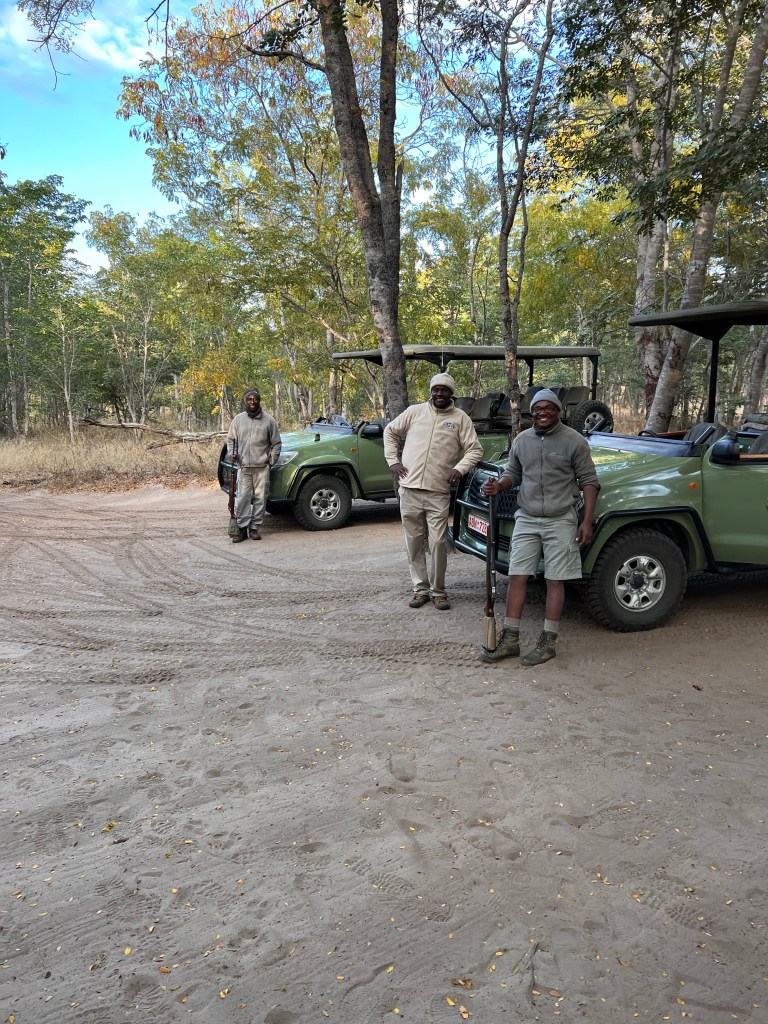
So today was the big one. The full-day game drive. Lunch in the bush with the animals.

I said animals, correct? Well let’s start in the flora arena shall we? Get the excitement to build with something stationary.

This is a sausage tree. I would like to address something right off the bat. I would like to apologize for this picture as I apparently fell down in my photographic obligations and did not have a photo of my own to present of this magnificent tree and it’s intriguingly shaped fruit. Instead, you are being subjected to a photo that is taken, in the social media photographic world, at the Dutch Angle. Hopefully this has not soured you on the remainder of the posts.
Anyhow, the wood of the tree is quite hard and had been commonly used for dugout canoes and the tree fruit is eaten by a number of animals both while still on the tree and once it has fallen. “Ellies” apparently love crunching on the tasty morsels. The fruit is heavy and dense, with some of the larger samples measuring perhaps longer than a foot. The liquid inside is believed to have some medicinal properties as well, usually surrounding strength giving properties. If you rub it on the umbilical cord of an infant, the infant will be strong.
Now, I can only assume that the next bit came largely, no pun intended, from the vaguely phallic shape of the fruit. Before I go any further, if you have delicate sensibilities, I suggest that you skip ahead to the next photograph as the following may be a little rough. If you continue reading on, it’s on you. Ok? Well then.
It is believed by some of the liquid inside of the fruit of the Sausage Tree will enhance the manhood of a male if a certain procedure is followed. First, the manhood must be slightly cut crosswise multiple times, sort of like stripes. Second, the liquid from the fruit while the fruit is still small must be dripped on the now abraded manhood while the fruit remains attached to the tree. Then, as grows the fruit, so grows the manhood.
I think that about covers it. Of note, Kingsley tried to get Patrick to tell the story and he flat out refused. I believe Dumi refused as well, so Kingsley had to sleep in the bed he made, since he brought the topic up.
We continued on our journey. Here is what some of the ride looks like in video format.

Baboons! These things travel in gangs. Technically, the collective is called a troop, but if you saw how they move, it is a combination of a third grade class being excused for recess and a mob. Now, I’m not a fan of monkey-like animals, but they are pretty interesting to watch. The one above is on lookout. They have very sharp eyes and can see threats at a distance and will cry out if they see anything that bothers them. The interesting thing is, and this will be a theme, is that they don’t see the vehicles as a threat. That said, if you were to step out, the whole game changes. I also can tell you that the baboons are spirited creatures. They are mischievous and playful. And, as we witnessed, are ok with activities such as “morning glory” as Patrick called it. I’ll leave the details of that up to your imagination, but if you have a less than a pristine mind, your musings would be spot on.
On a more medical note, baboons have “bush doctors” who will work with the sick of the baboon troop to try to heal the ill members. The specific details of treatment were not discussed, but the fact that roles exist are an indication of the sophistication of the animals. Gloomier, however, mothers will carry demised offspring for a significant amount of time, hoping that they will wake up.
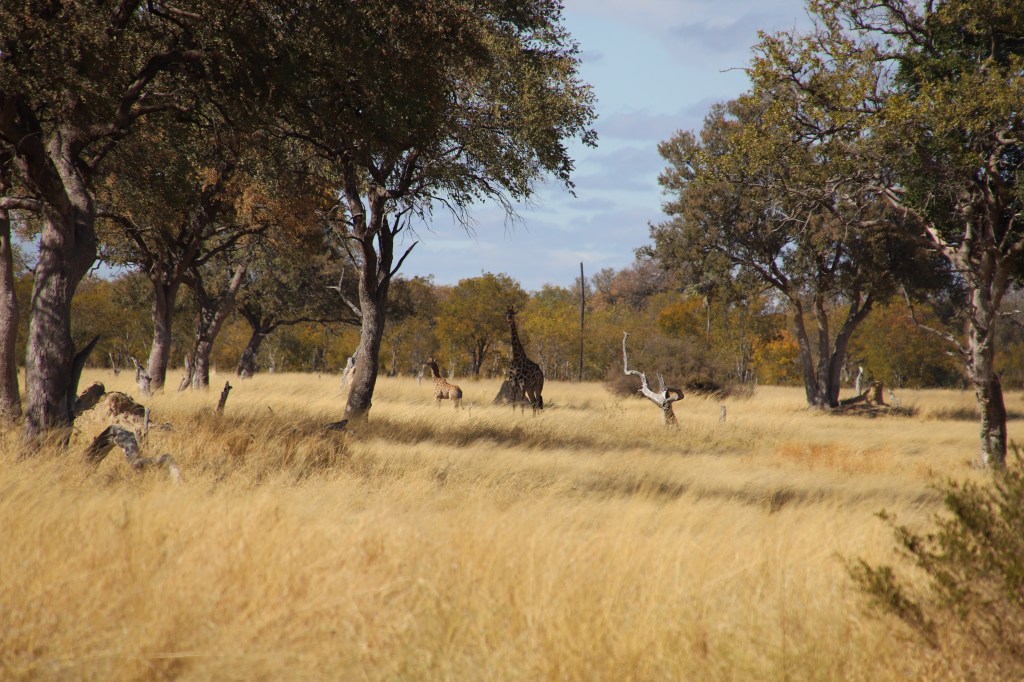
If you look a little more closely at the picture, you will see that there are grasses in the foreground and trees in the distance. That is because, as I understand it, the grassy area is where a river once flowed. What also happened was that palm coconuts also floated in the rivers. Elephants would find them, scoop them up, eat them, and “deposit” the seeds along the way. As a result, there are periodic palm trees distributed about the former riverbed. I will tell you that some of the precision of this information was lost a little bit in time and translation, but more or less that is part of why there are lone palm trees standing in this area, more or less looking like fake cellphone towers along the Hutchinson Parkway in Westchester, New York.
As an important note for those who may have seen the documentary “The Bushmen of the Kalahari” or the movie, “ The Gods must be Crazy” the Bushmen still exist. They still wear skins and still possess their incredible tracking capabilities. A few small villages still dot the edges of the Kalahari Desert.
The next part of our day pointed us in a decidedly human direction as we entered the gates of the Wexau Anti-Poaching Camp, the home of the Scorpion Anti-Poaching Unit (SAPU). These folks mean business.

Poaching more or less, as I understand it, falls into three categories. Trophy, where the goal is to obtain an animal or part of an animal for display or sale. Medicinal or religious, where there is a belief in acquiring an animal or part of an animal is an element of a “medicinal” or theological or mythical practice, or subsistence, where the goal is to circumvent the established process for acquiring game meat. Predominately, the latter practice is the one that is the most damaging in the national park and the one focused on by the SAPU.
Subsistence implies that the hunters are hunting for the purpose of feeding people. The benefits of feeding people are probably something that likely can be agreed upon. That said, however, the mechanics of how poaching works in this case are very seriously debatable. This, incidentally, is not my opinion, but the collective opinion of the poachers’ peers in their community, so it would seem. There seem to be two issues if we really look at it. One is that decimating a preserve harms another peer group. The other, and more dramatic issue is the way the poaching takes place.
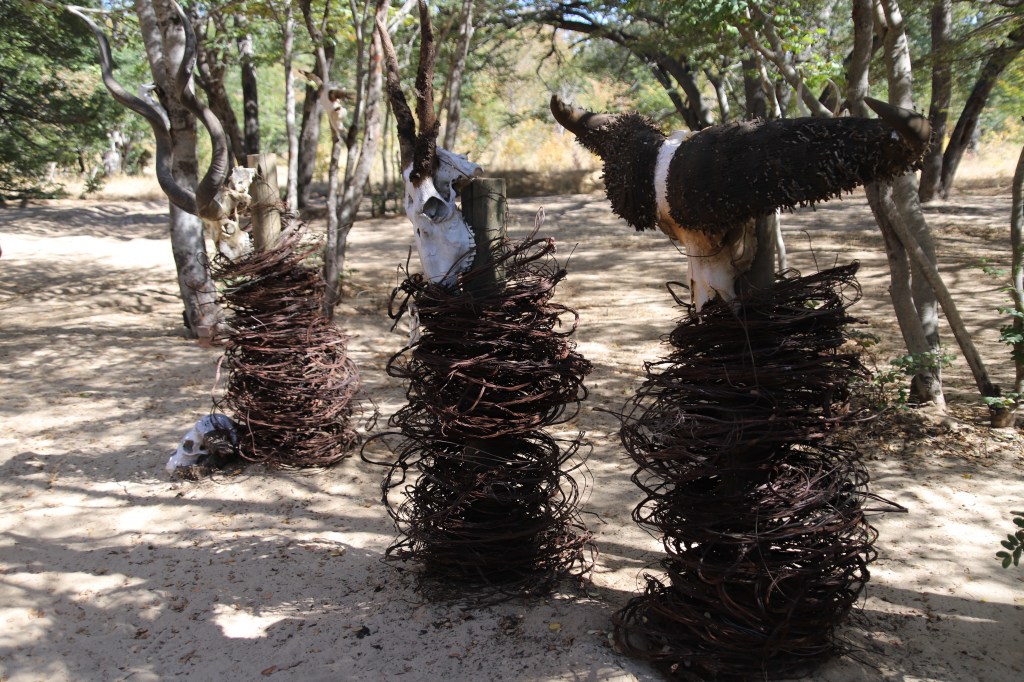
The poachers generally use two types of traps. One is the wire snare, which is essentially a wire slip knot made of either straight or barbed wire. They are hung, secured to trees or other rigid hard points at certain heights. An animal will walk into them headfirst and not be able to back out with out the snare closing tighter.
The other type of trap is a chin trap. I find this one pretty disturbing. It is like a bear trap, if you have ever seen one. The difference is that the poacher puts food in the trap it catches the lower jaw or whole face of the animal. It’s pretty nasty.
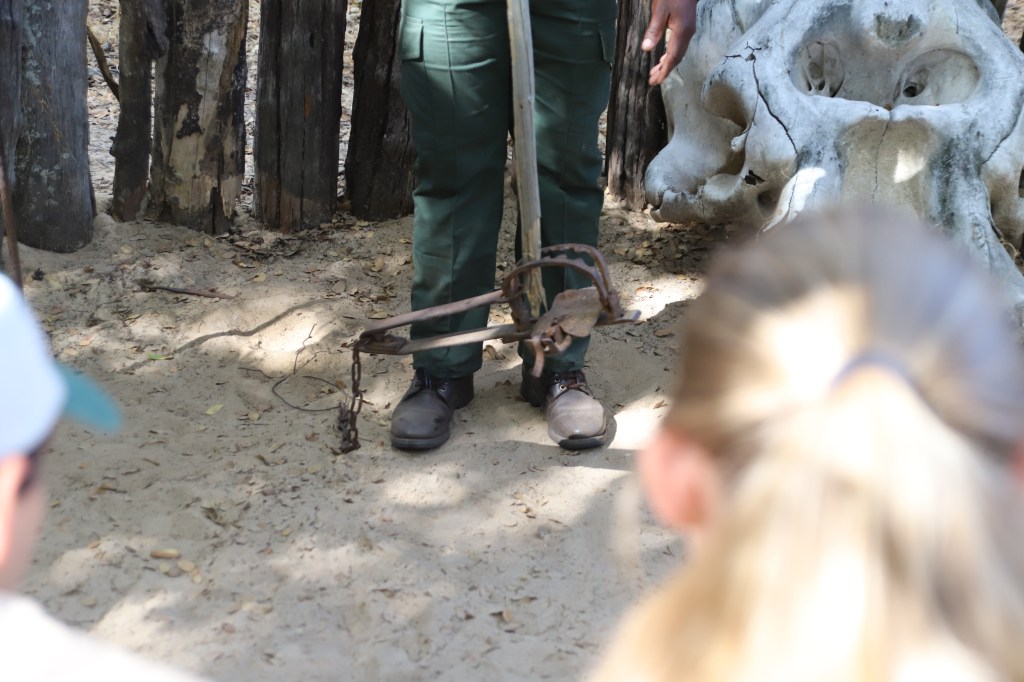
Some poachers also use firearms and poison, but these are less common tools in the subsistence arena. The issue with subsistence poaching is that it is indiscriminate. The traps catch whatever animal gets caught and a poacher will put out many traps with the hopes of catching one animal, as that is all they can carry and store at home at a time. So if they catch one, they may leave out the remaining snares for a while and any animal that gets caught may stay in the trap indefinitely.
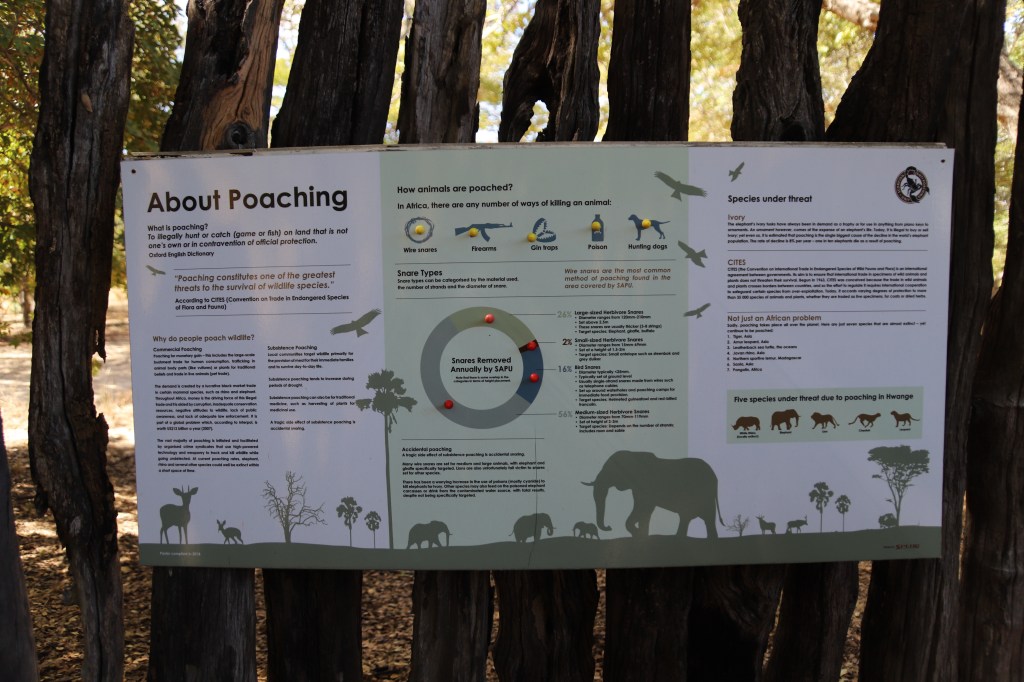
The anti-poaching team consists of scouts working in conjunction with park rangers. The scouts are unarmed; the rangers are armed but they are fewer in number. They patrol randomly, generally close to the perimeter of the park. If they find a snare, they may choose to remove it and confiscate it or they may choose to stake out the traps and wait for the poacher to come and check their trap.
I asked them what happens then. I was told that they detain and educate the poacher and will bring them in for prosecution if there is enough evidence. I asked them how they educate and detain if they are unarmed. They are all quite fit. They just sort of looked at me and said they just convince them that poaching is both illegal and against the conservation policies of their park. I can only guess what that means. They do need to collect evidence such as a snare, evidence of trespass,or possession of an animal. The poacher can get up to 3 months. The program has collected more than 3,500 traps since it began in 2011. Not too shabby. Thank you for your service!
We eased on down the road, as they say in the Wiz. It’s ok if you don’t get the reference; it makes me smile. The next part of our trip was going to be to head to our lunch spot on a section of the former river section savanna called “the Promised Land.” Initially, I figured the name might be a little pretentious. I was wrong.
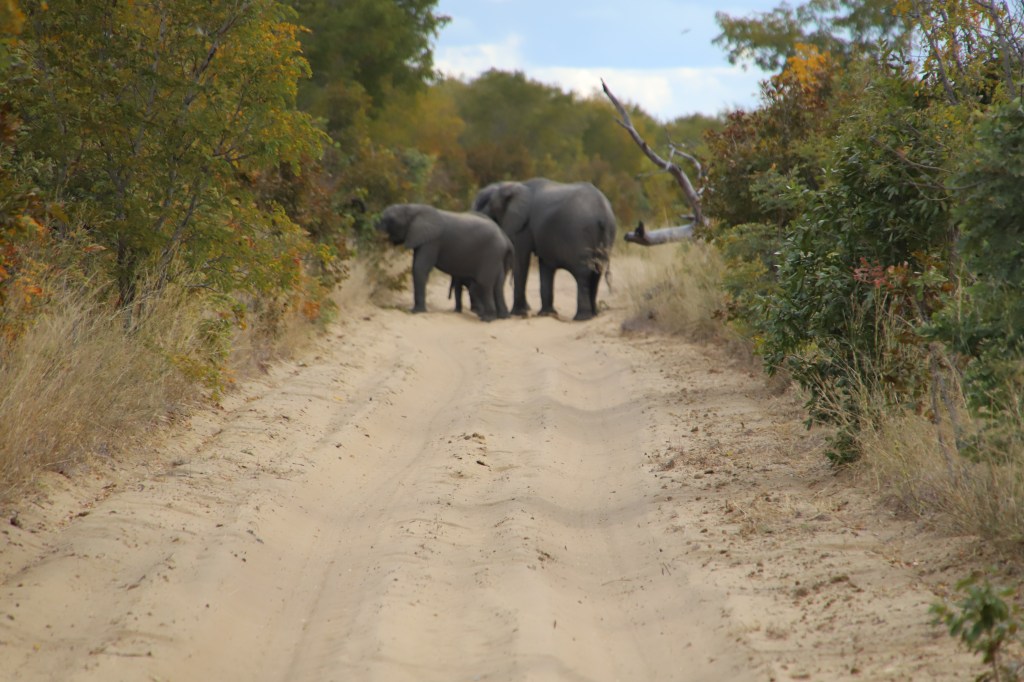
On our way, some folks were crossing the road.
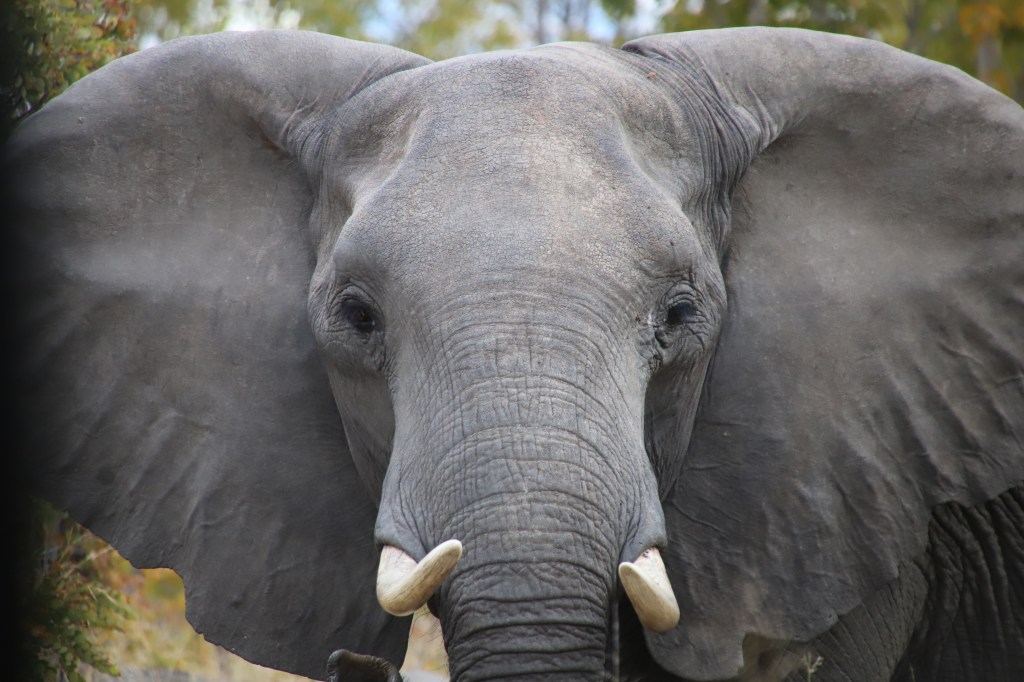

Patrick rested his arm on the steering wheel like they were school children crossing the road at the end of the day.
The ellies did acknowledge us with some ear flapping and a couple of stomps, but Patrick didn’t flinch, so it all seemed to be ok. After they disappeared into the brush, we continued on. It’s fascinating how such large creatures can just vanish into the undergrowth.

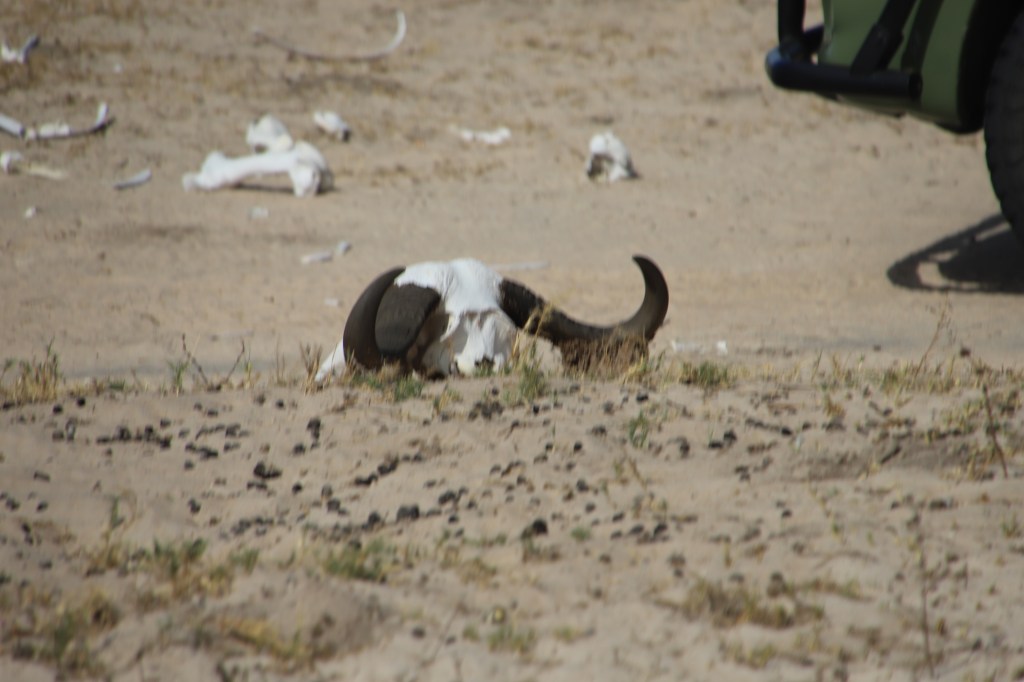
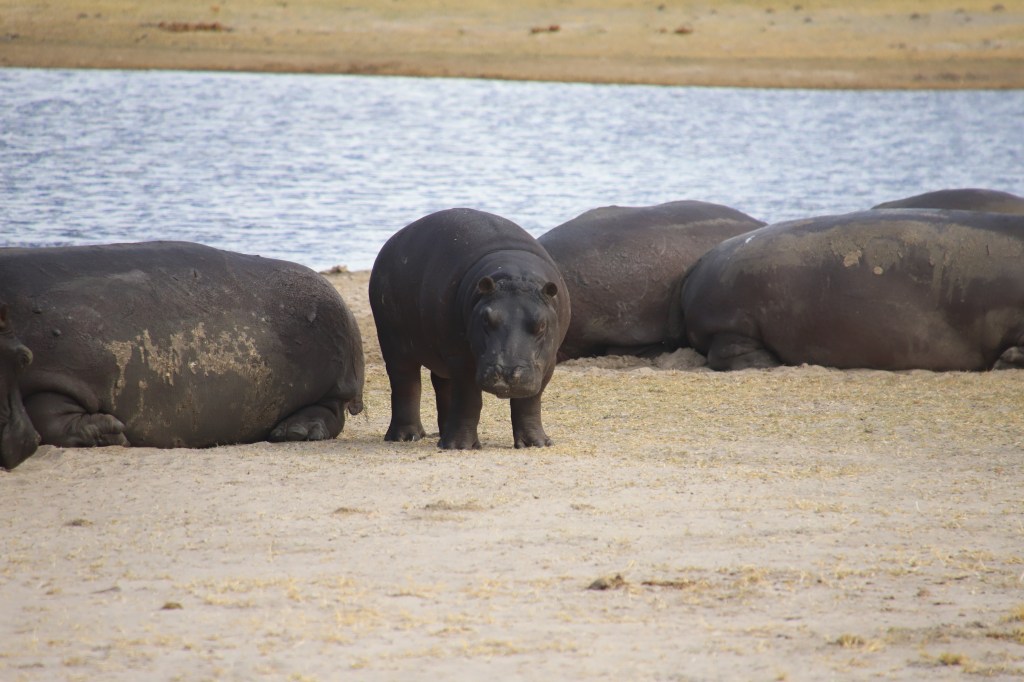
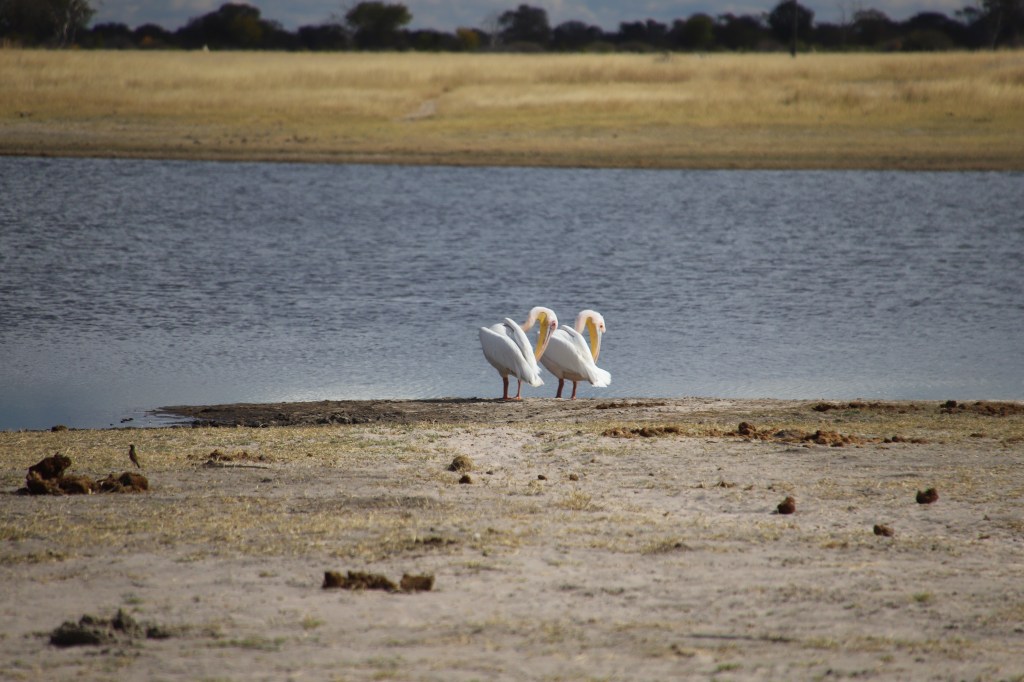
The Promised land is pretty grazed down by many of the animals that use it to traverse the area but it does have a large watering hole in the middle of it with some trees for shade. The whole gang was here.


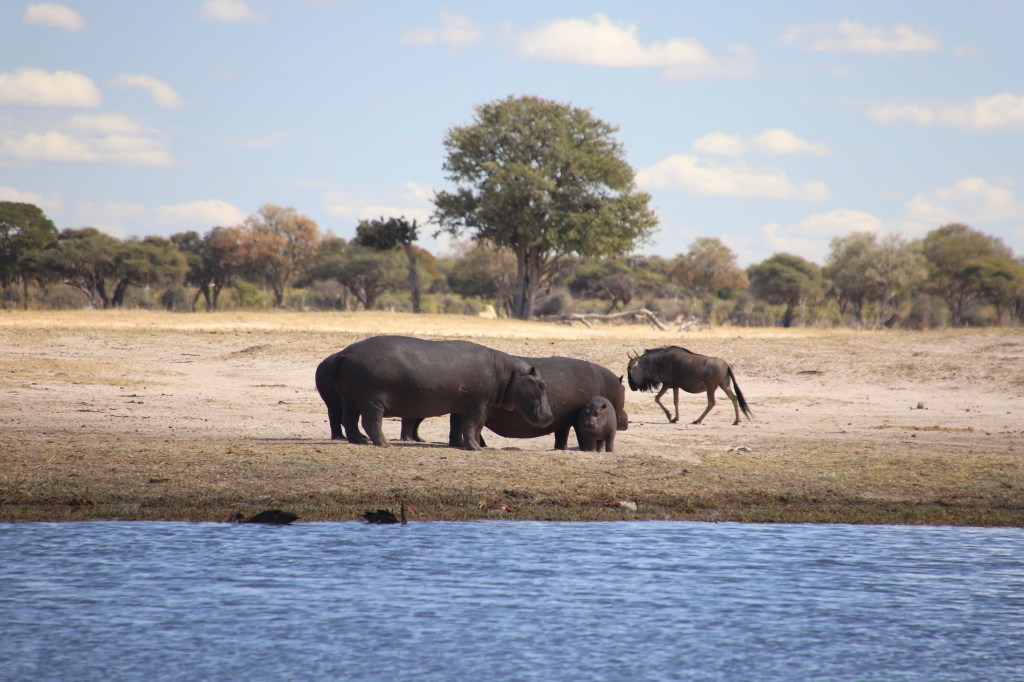

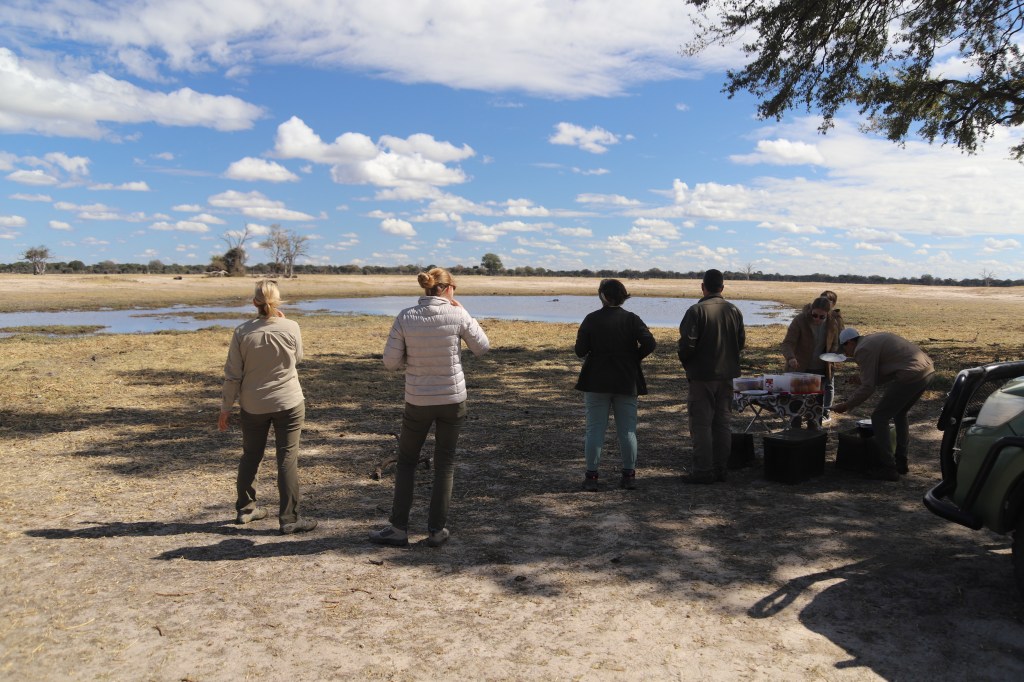
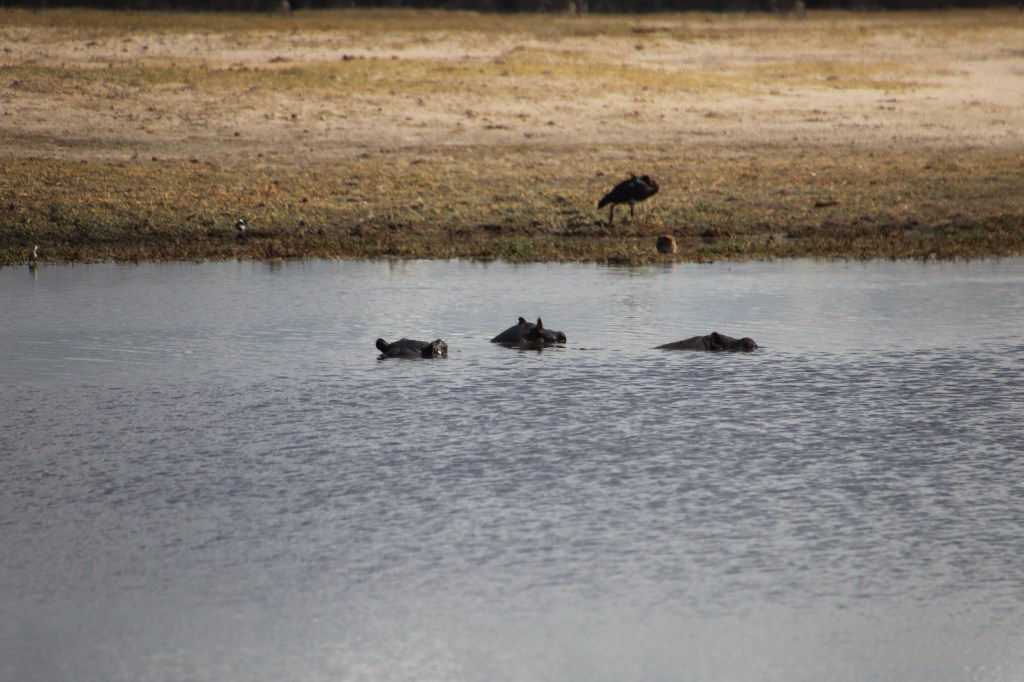
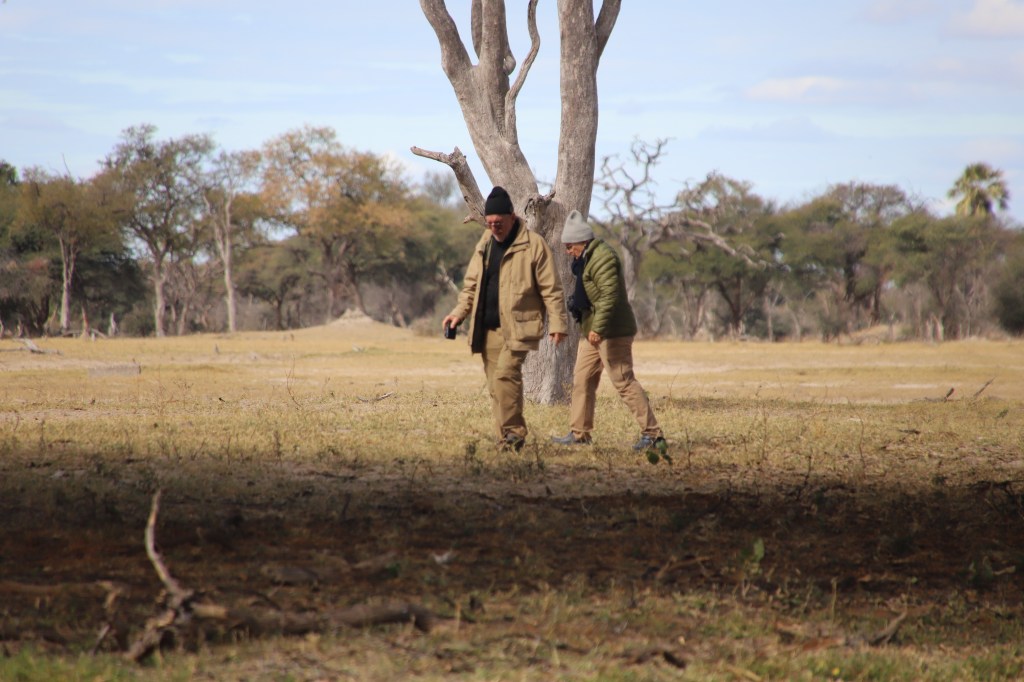
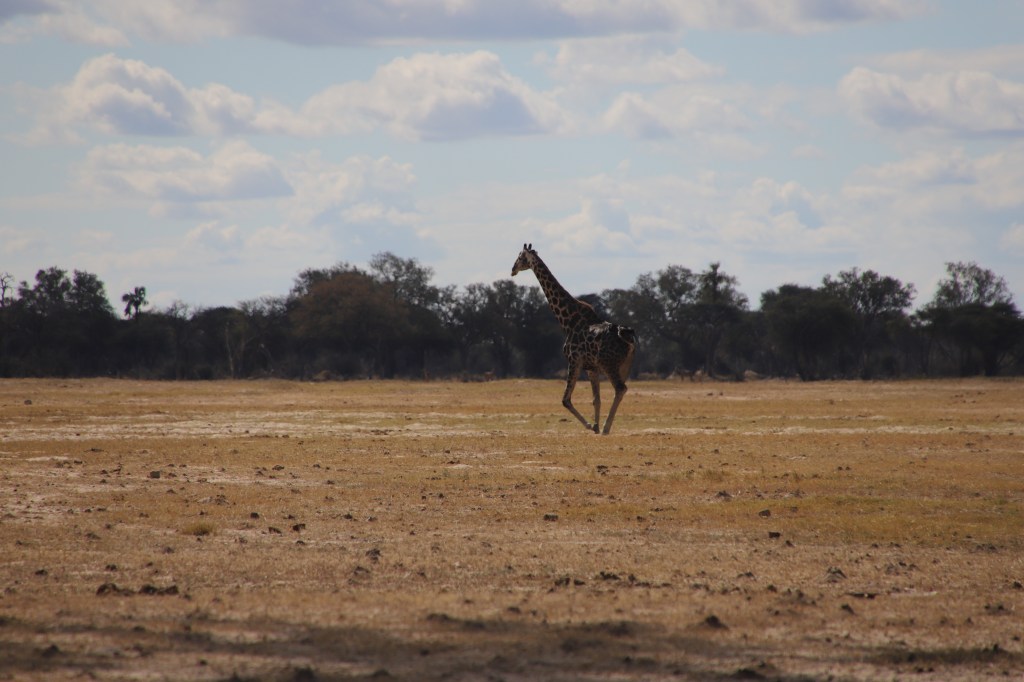
After lunch, we headed back toward our camp. It had been a long day of bouncing around and some chill time back at the camp was in order. High tea was becoming a highlight!
When we got back to camp we were given our usual heroes’ welcome from Patrick and Shumi. Upon telling Shumi about our day, she responded simply with “happy day.” Yes it was.
We had dinner and completed our evening with some quality time around the African TV. It turned into a true confessions session as we all shared more of ourselves with our hosts and guides, creating bonds that we had no idea we were forming. Goodnight Africa. Sleep well.
 Safari in the Crucible of Humanity
Aaaah Josh! You’re making me homesick …….😄
LikeLike