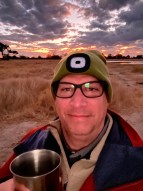
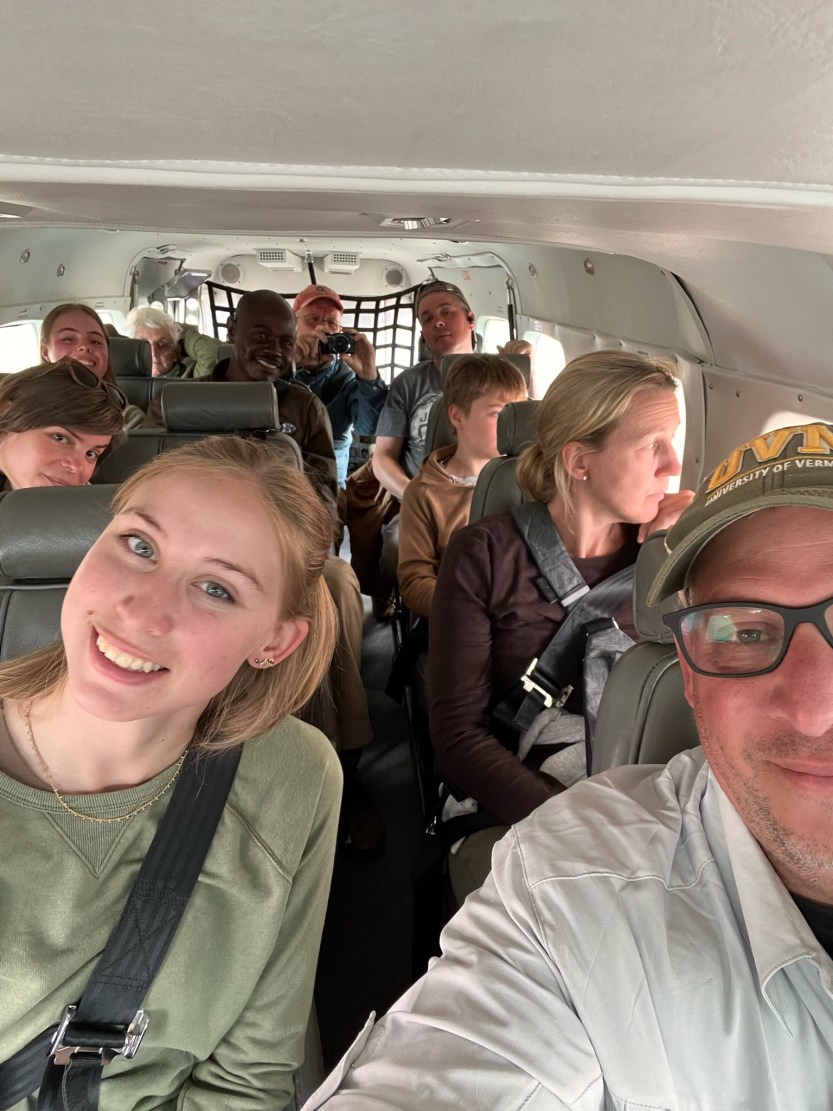
The next part of our journey would take us to the airport in Livingston, Zambia, a population of approximately 300,000. This would also take us through our first land-based border crossing. There are no pictures of this process. Why you may ask? Well, they don’t let you. I guess it’s the same at customs in the US but I will tell you that the process is quite smooth and required some simple paperwork and flashing some vax info and the passports. I will say that Dumi’s prep gave us a good head start on the process. We also changed buses and got our new driver, KayJay, here. Apparently, the buses and drivers stop at the borders as well. You shall not pass! I’m sure that it is a paperwork issue…
We continued on to Livingston. Yep, it’s the place named after the doctor from the phrase “Doctor Livingston, I presume” fame, who we would learn a lot more about later. The airport itself was originally named after the good doctor but was renamed after one of the leaders of the Zambian African National Congress, Harry Mwanga Nkumbula. It is a beautiful airport, with renovations completed in 2017, and a capacity of 700,000 to 1,000,000 passengers annually. In 2019, 175, 000 passengers passed through the airport. I’m sure that is a disappointment to all involved in the tourist and commerce industries, however, it made our passage quite streamlined. The security check was a breeze as we headed out to our “private” flight.
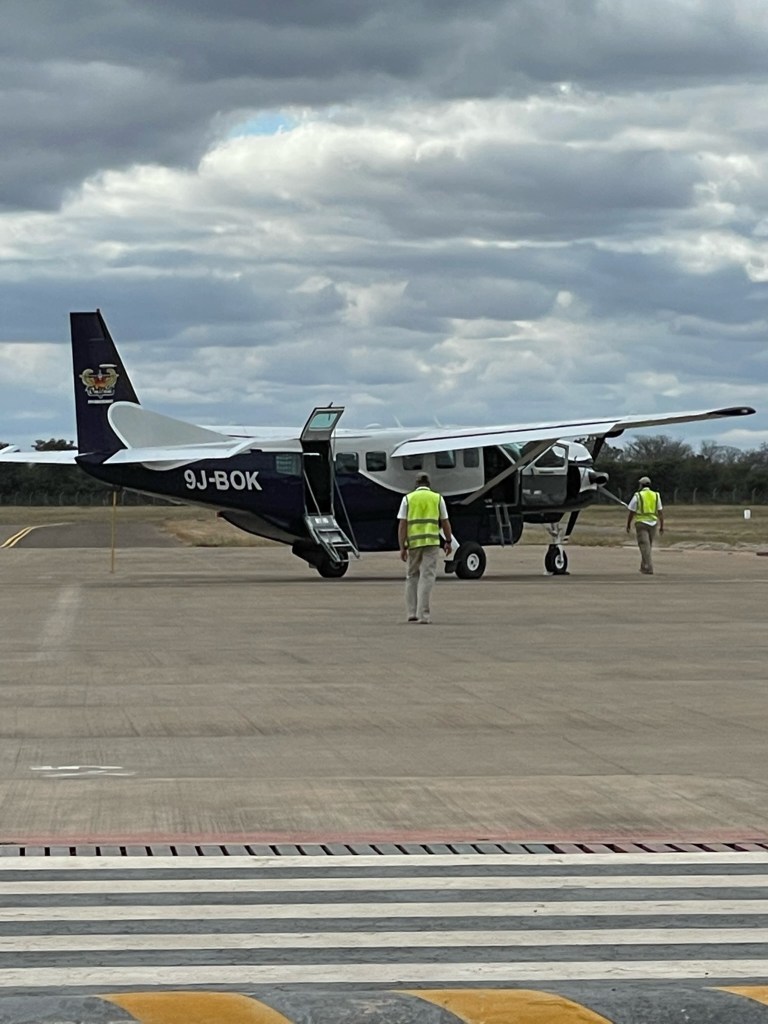
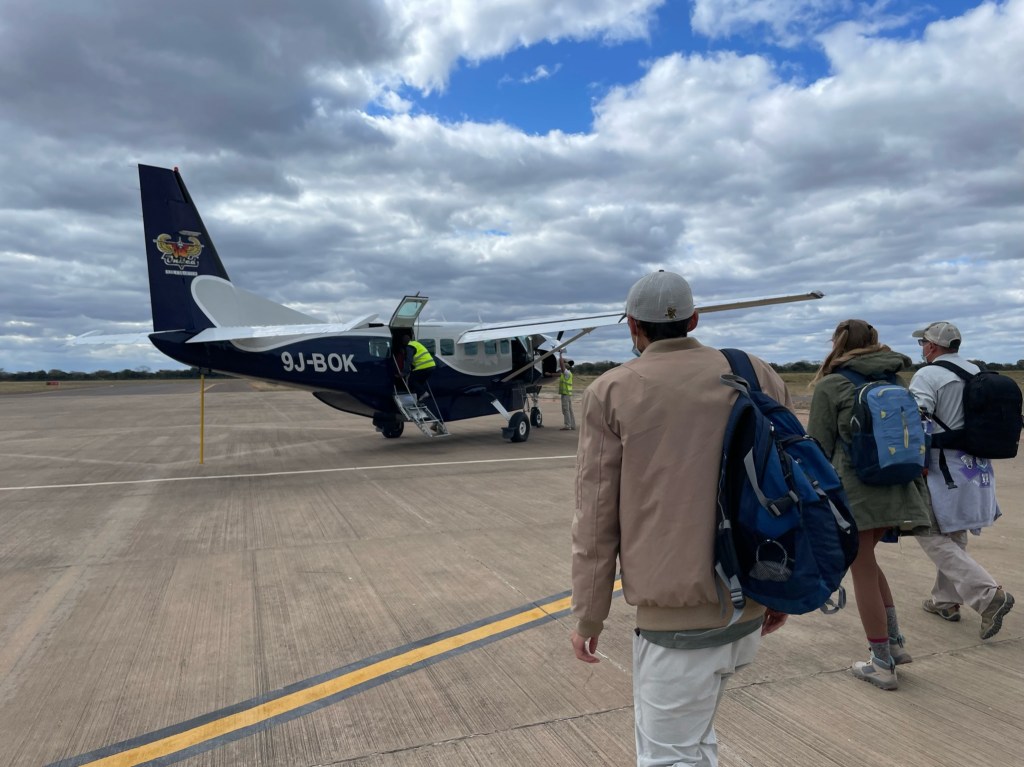
I love flying. Let me say that again. I LOVE flying. In fact, I was well on my way to my private pilot’s license years ago, prior to buying a house and having kids. The 12-seater Cessna Caravan is a classic small bush plane and is well designed for the dirt and grass runways in the bush of Africa, with its heavy-lift capability and rugged landing gear. They have been used for this type of service for decades. Emily doesn’t care for or about this sort of thing. Chris and Hugh were our pilot and co-pilot, respectively, as Em found out. I think that she would have tried to get their resumes, certifications, blood types, and lineage if she could have. For more in the Caravan, see this link https://en.wikipedia.org/wiki/Cessna_208_Caravan. For more on the pilots, see Emily.
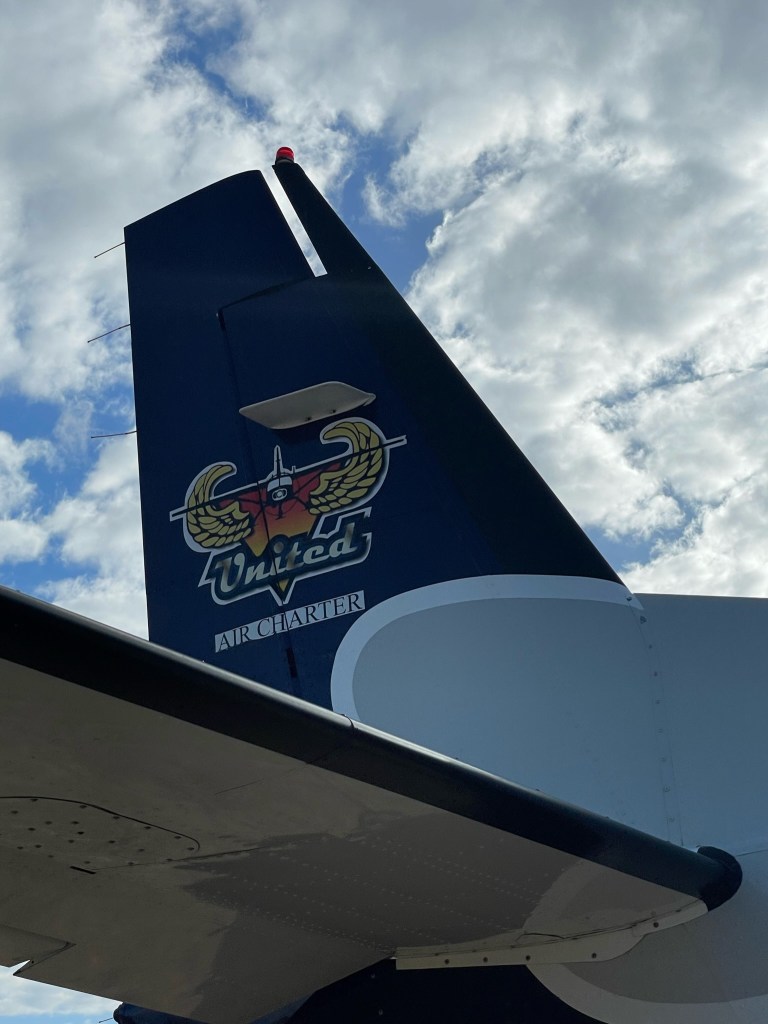
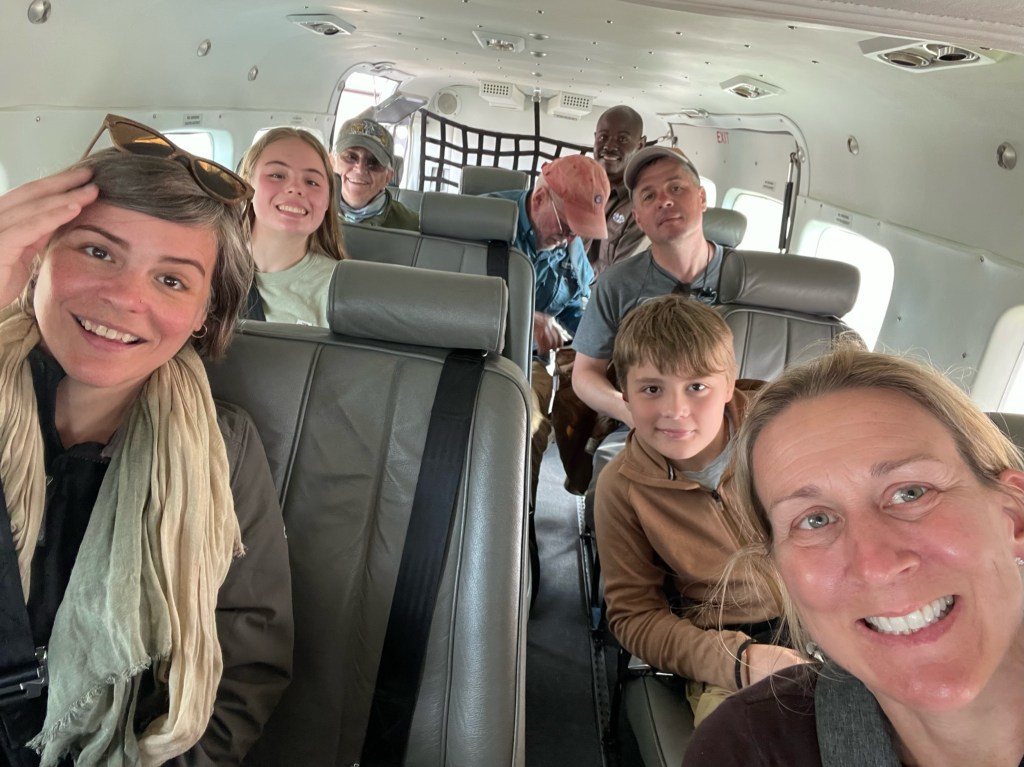
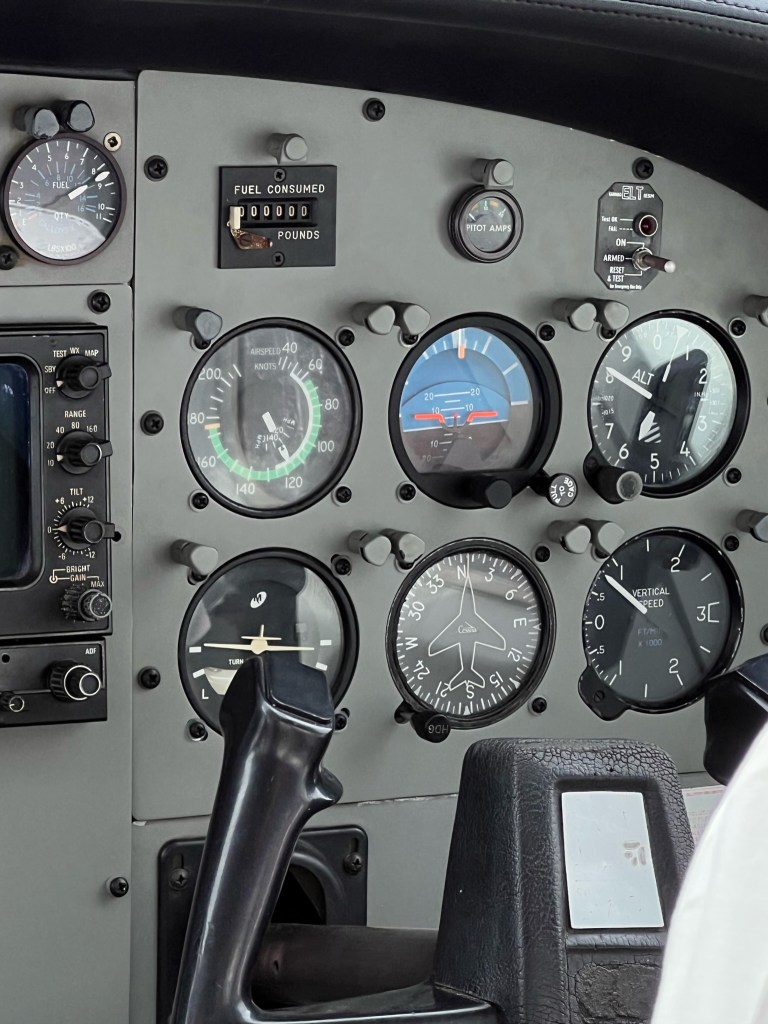
It was really quite nice to walk out to the plane with your bag, walk up the ladder/staircase, toss your bag in, and pick whatever seat you like. Moments after getting seated, we were airborne, cruising at about, what looked to me as I looked at the gauges, 13 thousand feet, which seemed a little high for a non-pressurized cabin. Nevertheless, it was a short flight that took us over the countryside where we could see the rivers and interestingly, the controlled burns of the savannah. Apparently, the area had been dabbling, with the help of experts from the US and other countries, in controlled burns. We were greeted by a very smooth landing on the dirt runway and by our new guide pair, Neddy and Frazer.
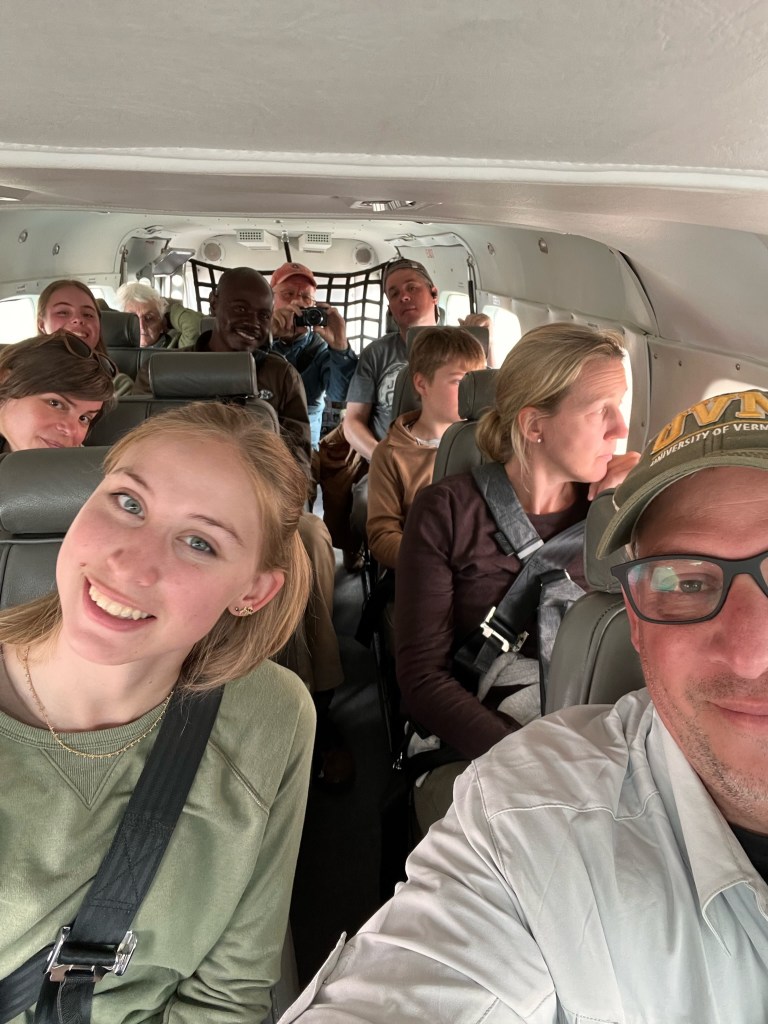
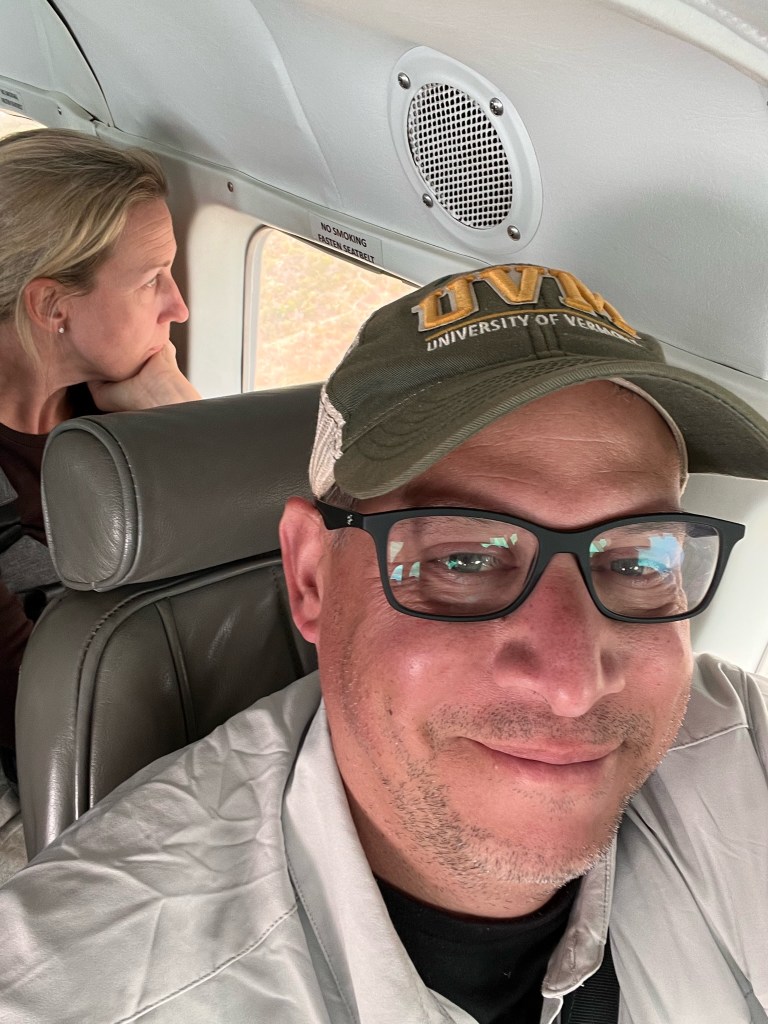

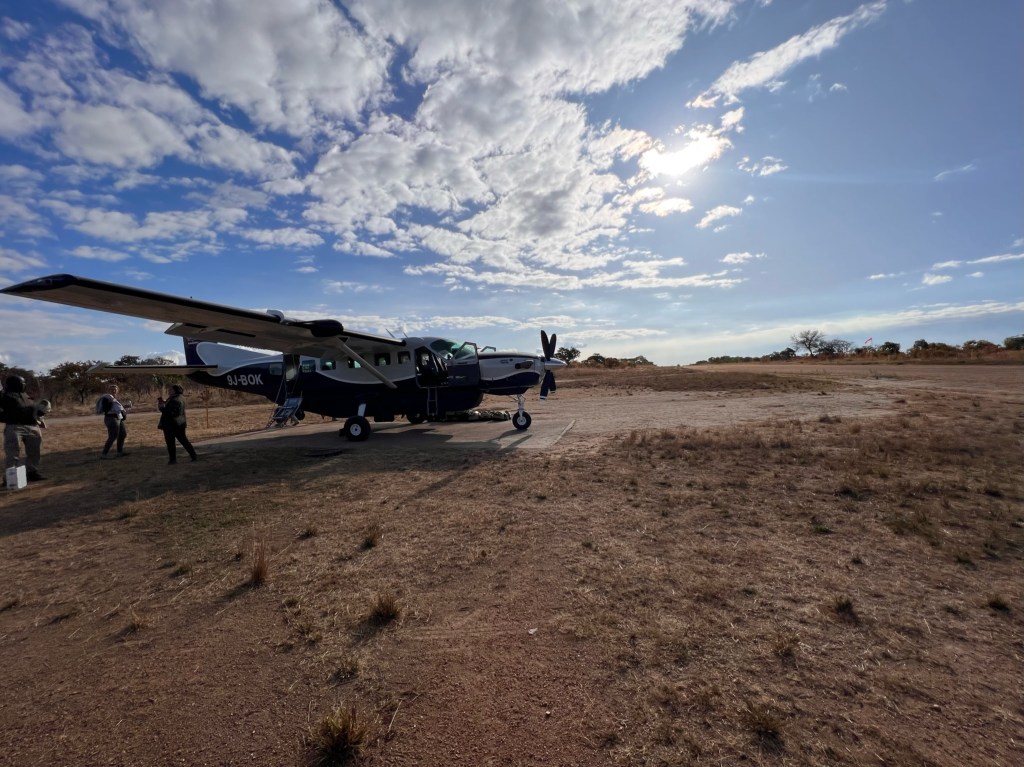
I’m not sure if this is a calculated thing, but it seems that the guide pairings are intentional. Neddy is a dynamic, chatty fellow, with a charming gift of the gab. Frazer is a little more reserved, perhaps more introspective, maybe more technical. After a quick snack and a bushy-bushy break, we headed off to Kafue National Park.
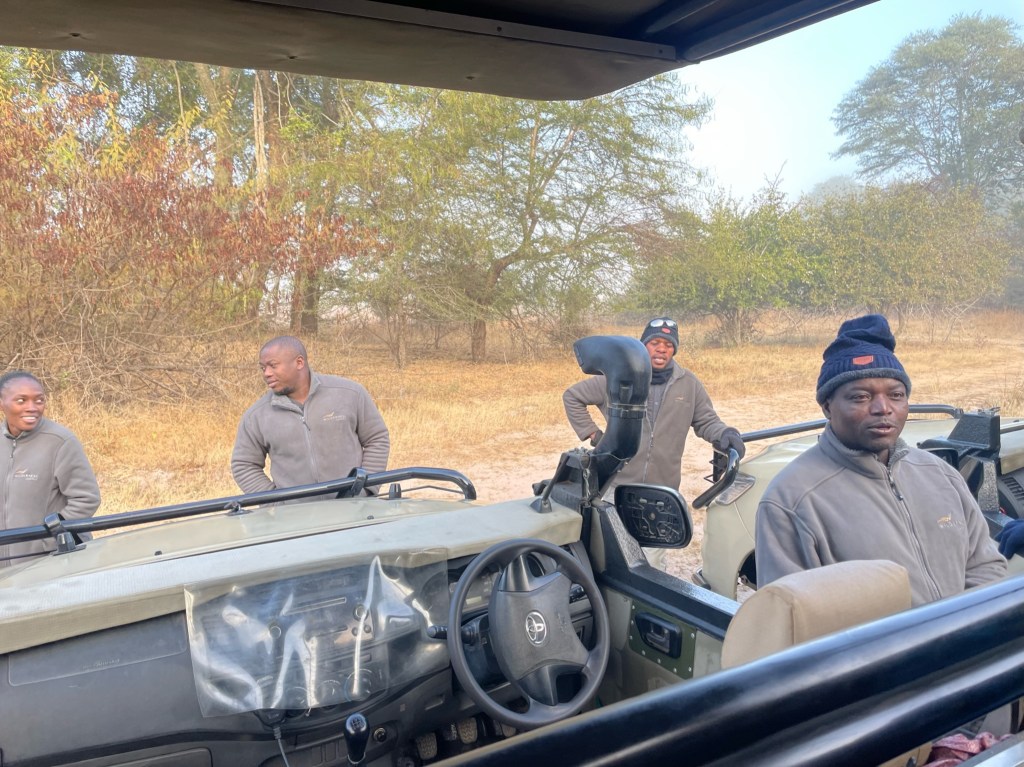
The Kafue National Park is the second largest in Africa, second only to the Serengeti. https://www.zambiatourism.com/destinations/national-parks/kafue-national-park/ For reference, it is about the size of Massachusetts. I’m not sure if that really helps develop scale, but I’ll toss the comparison out there for sport. The region is not as progressive as Zimbabwe and is perhaps 30 to 40 years behind some of the more socially advanced areas in Africa and currently has an unemployment rate of over 60 percent. This is not a great combination, but primary and secondary education has recently become free, so there is hope that will create some traction.
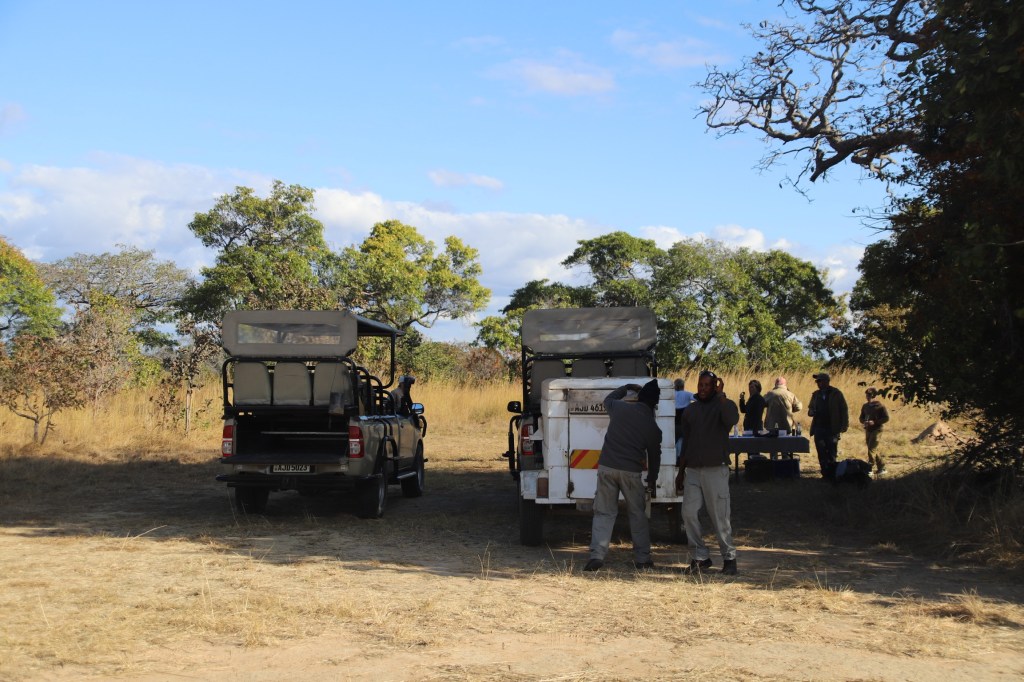
The trip to the Musanza Camp, particularly the off-road portion, was a very different experience than the trip to our last camp. It was in the same vehicle, it was still off-road, and we were still on the lookout for various animals. The bush itself was very different, however, with the ground conditions themselves existing in somewhat of a paradox. The water table is very high in the area and the bulk of the savannah floods in the rainy season. This day, however, the ground was cracked and as hard as pavement, so hard, in fact, that the vehicles barely made a track on the path. Talk about a core workout. To add to the cognitive dissonance, the park has a river running through it and the camp sits on that river, called the Lufupa.
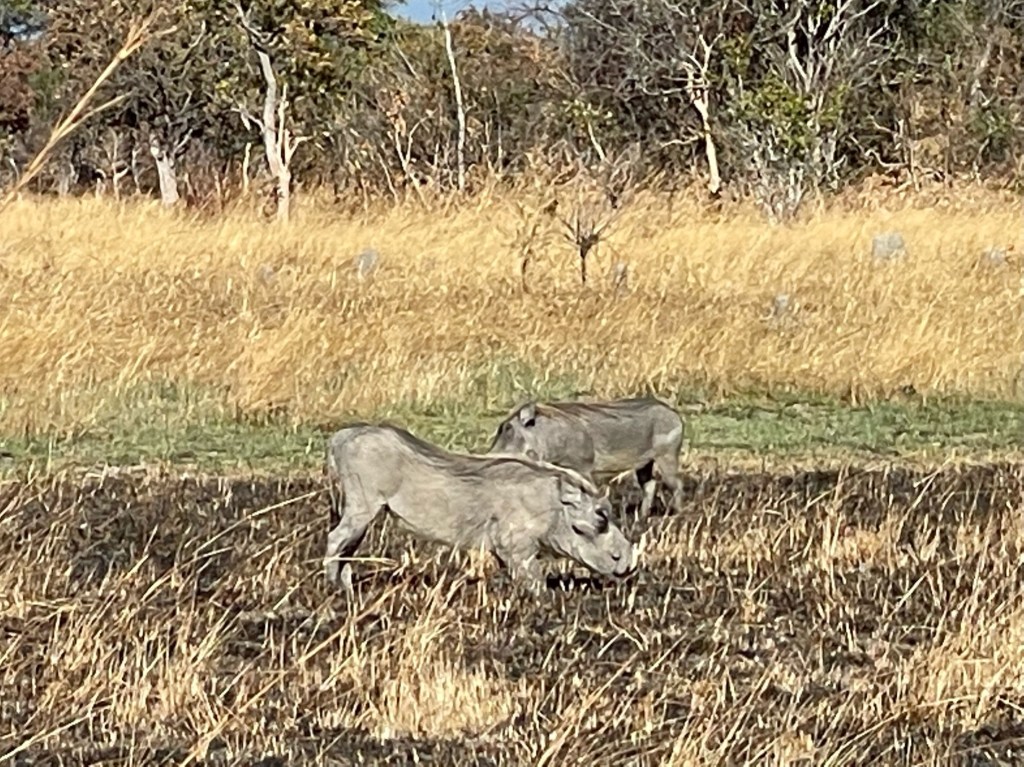
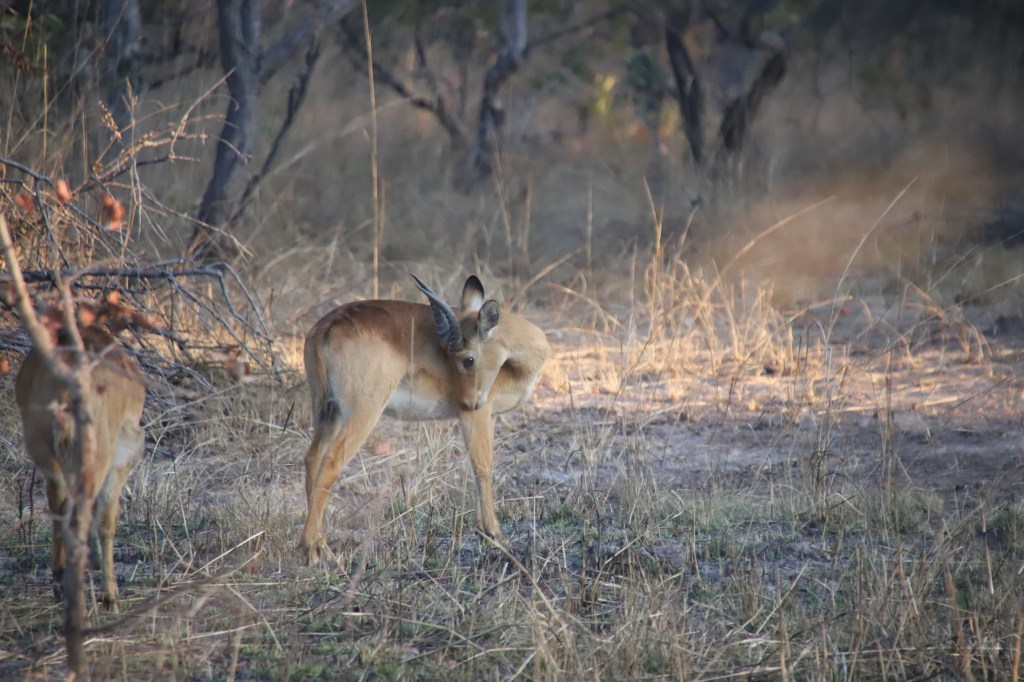
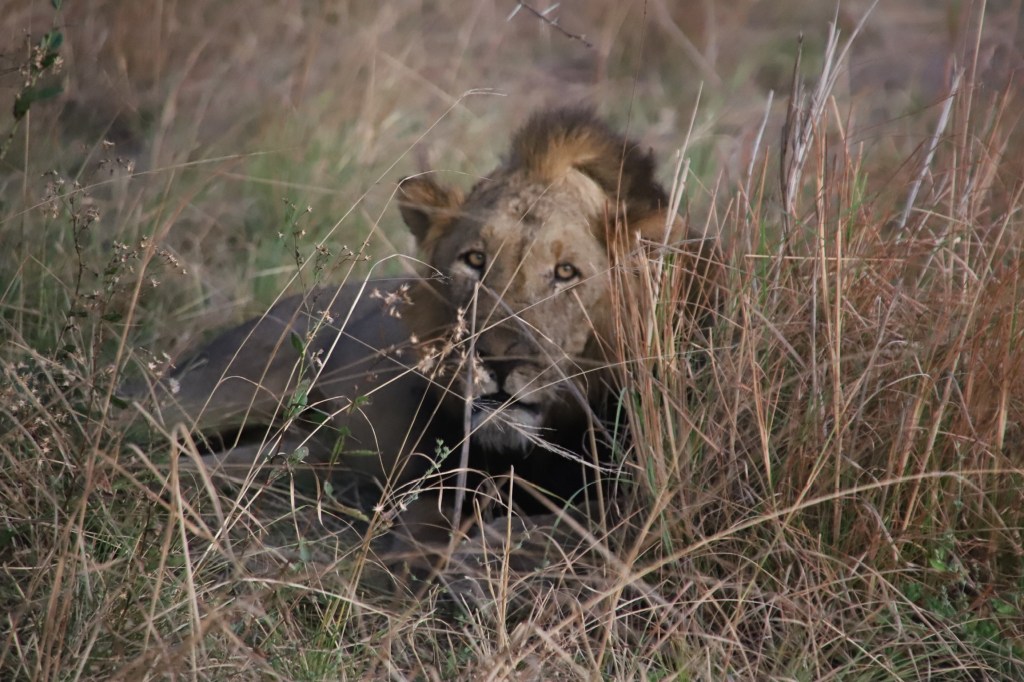
We bounced our way along toward our camp, Dumi chatting with the guides, some in Nyogi, the local language, some in English. Dumi had given us a heads up that the locals may flip the use of the letters “L” and “R” in their speech, which may have led to some confusion in the word antelope for some folks. We did see a few of them along the way, as well as a few warthogs, some guinea fowl, and a side-striped jackal. Nature giveth and taketh away, so a large male hippo and an old male lion had found. Evidently, the hippo had lost a hard-fought battle with a competitor and now looked like a giant tipped-over child’s toy, except for the huge gash in the midline of his thoracic cavity. The actual winner in all of this was the aging lion, who was sitting proudly beside the kill as if he had been the champion, and not just the beneficiary of bush leftovers. While this sight may have been a little hard to process, it is all part of life in the bush and a reminder that while we were getting to see the beauty, there is still a daily battle for survival that is raging on the savannah.

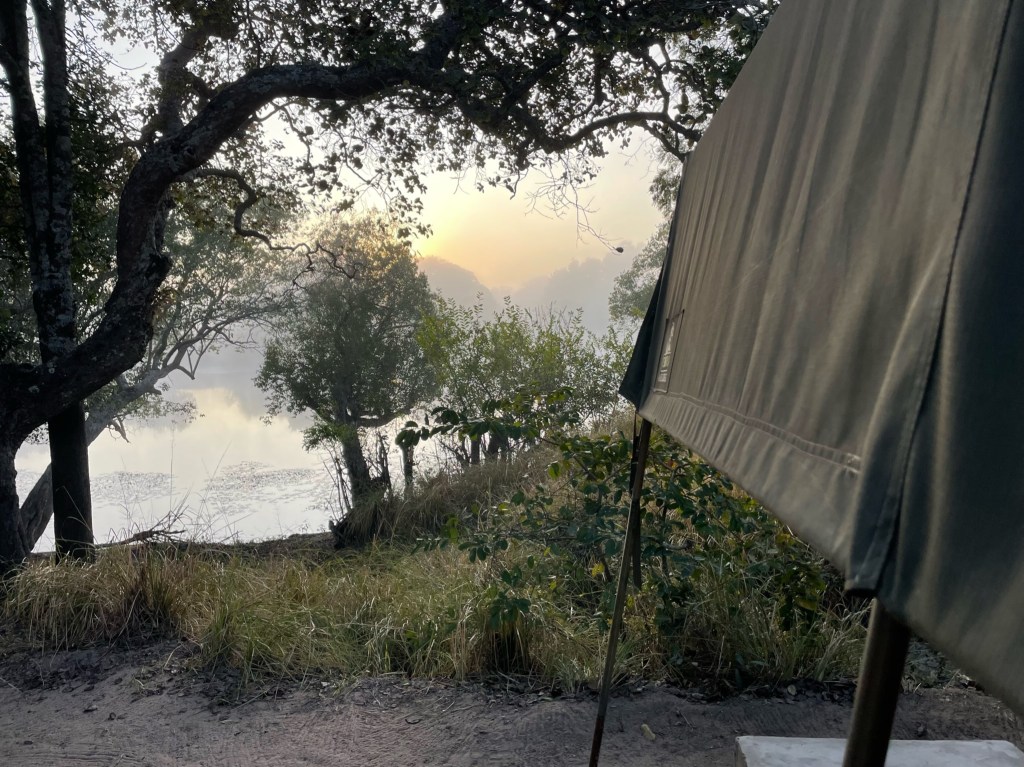
The camp welcome was really spectacular; warm and welcoming, and included drums! I have to admit, I could get used to this kind of welcome. Like when I pull into work or into my driveway. I suspect that is unlikely to happen, but I can dream. The camp is gorgeous, nestled on the bank of the river under a canopy of large trees. We are greeted by Doreen and Ignatius, the managers. Doreen is new, having joined only 2 months ago and Ignatius is a veteran at four years. Rounding out the primary staff are Peter the Chef and Emmanuel the Barman. Also there to greet us, directly across the river were a few hippos, including a baby!

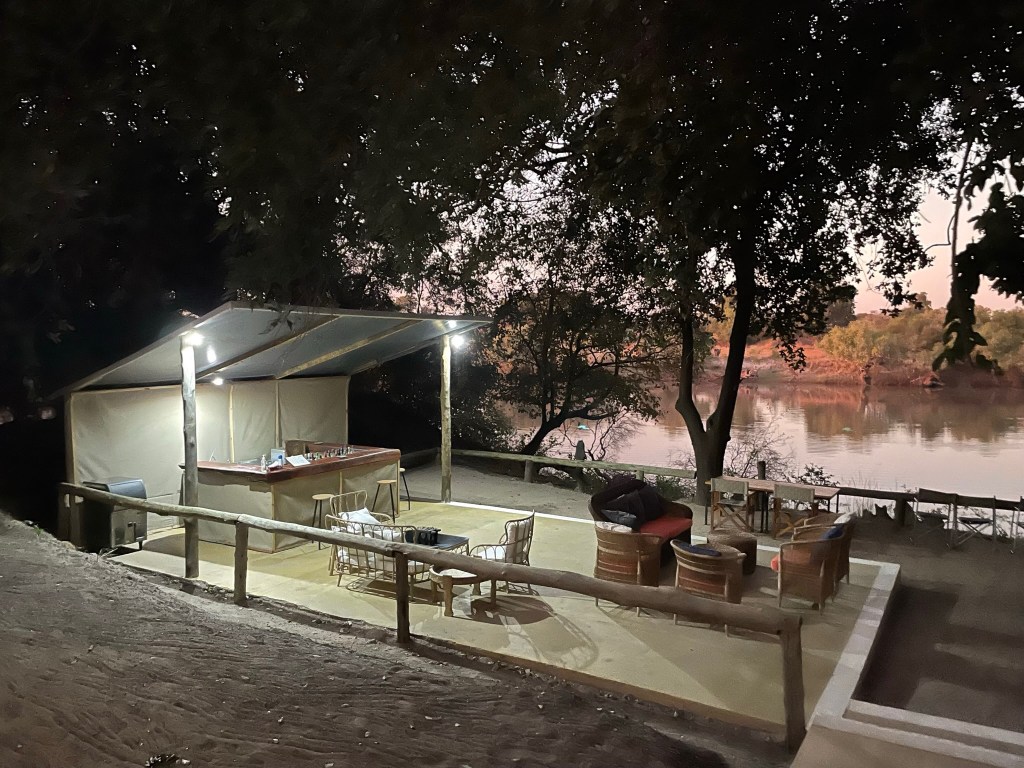
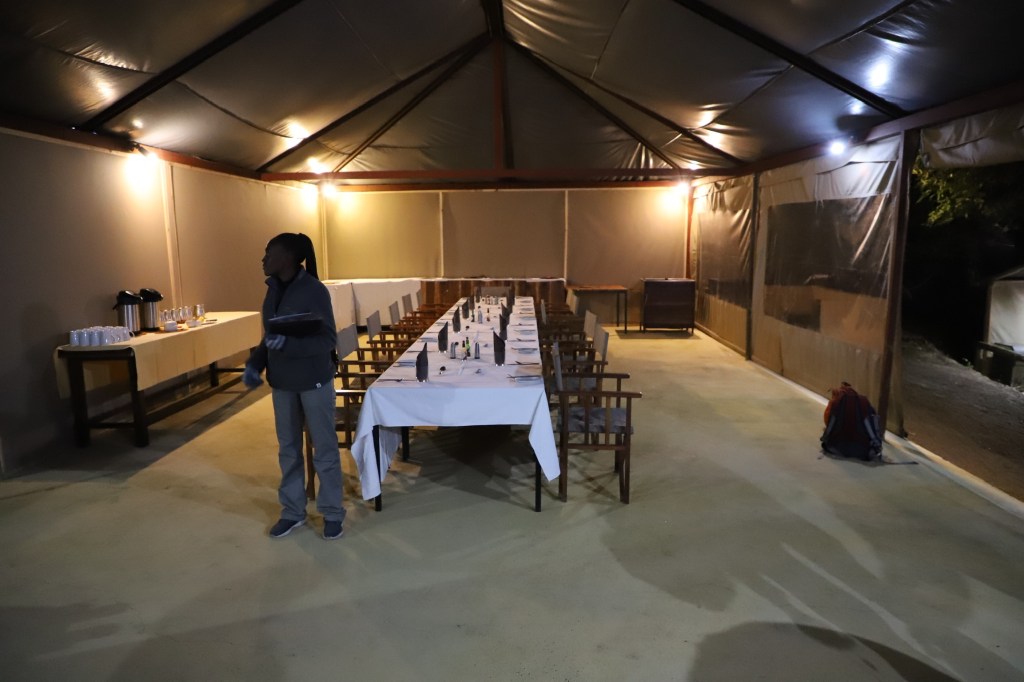


We’ve been asked a lot about the food and I can say unequivocally that the food is excellent. This night’s dining experince included curry chick pea with coconut milk, mushroom chicken over basmati rice, broccoli and squash, and orange crepes for desert. Jona and I split a nice red to wash it all down.


This had to have been one of our longest days taking a page right out Planes, Trains, and Automobiles. Five different vehicles, two safari trucks, two buses, one plane, all beginning at 4:30AM arriving at camp at 6:30PM. Then a couple of drinks and fine dining, capped off with a campfire conversation with Dumi and Doreen about the current beliefs surrounding witchcraft. Apparently, there is still some that believe that certain symbols such as owls and bats in a house may indicate the presence of a witch and that witches are capable of tapping on graves, raising the dead, and feasting on the bodies. This latter bit is seen more as a metaphor for the taking of souls, but the belief in witchcraft is still fairly present.
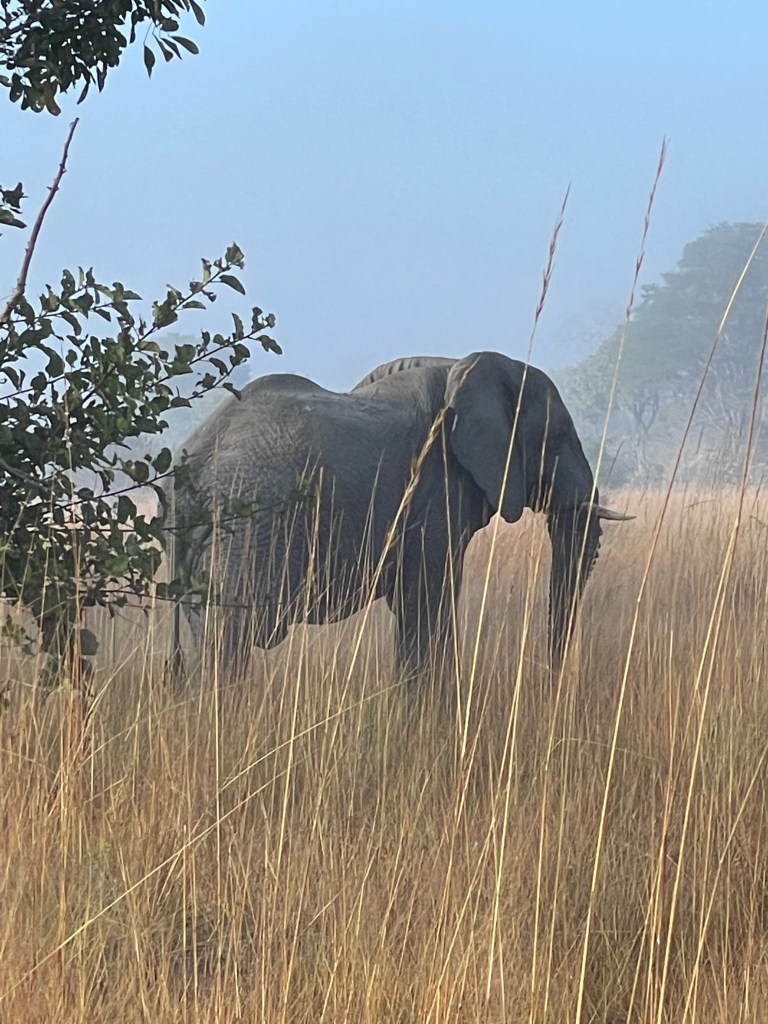
A heck of a topic to close the evening and as we walked back to our tent with our guide (no gun this time) we heard a crunching behind a nearby tree. The crunching turned out to be an elephant. Right there. Feet away. We held still for a moment until the crunching stopped and we ducked into our tent, to wash up, and fall asleep to the sounds of the hippos calling in the night.

 Safari in the Crucible of Humanity