

Before I start in with the actual post I would like to make mention of how odd it is being in airports for what equates to over two days. It never gets dark, except perhaps on the plane. Ish. It is pretty disorienting, even for someone who frequently works nights, so I can only imagine what I was like for the rest of my family.
Nevertheless, we were able to squeeze in four or so hours of sleep before our tour of Soweto. We all recognized that perhaps we might not be so fresh, but it seemed like missing a tour of this historically and currently important sociopolitical microcosm would be a lost gift. I’d suggest that we were right.
We met our guide at 1:00PM at the hotel. Here is a call back to the earlier disorientation. I can’t, and as I write neither can the rest of us, remember the name of the guide and bus driver. I can tell you that they were wonderful. (Ed. note. After some sleuthing, we finally determined that the guides name was Thabang. You will see this through the rest of the blog)
Our first stop was, it would seem, a way to ease us into the general culture of the area. It happened to be the soccer stadium on the outskirts of Soweto, a bowl shaped like a traditional communal beer drinking bowl commonly found in southern African villages.


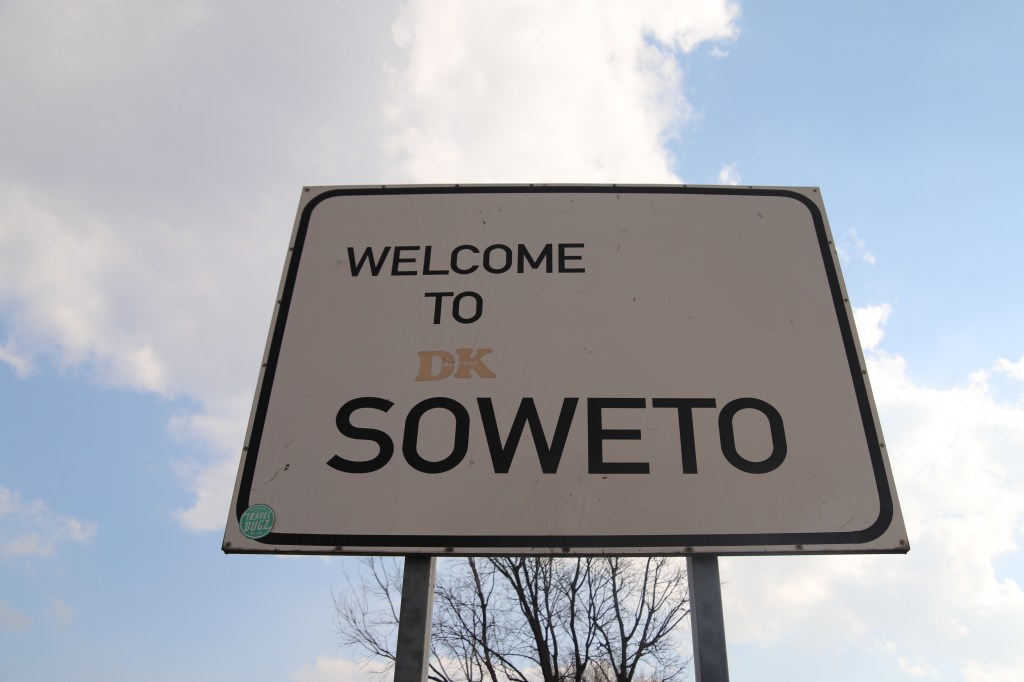
Soweto (/səˈwɛtoʊ, -ˈweɪt-, -ˈwiːt-/)[3][4] is a townshipof the City of Johannesburg Metropolitan Municipalityin Gauteng, South Africa, bordering the city’s mining belt in the south. Its name is an English syllabic abbreviation for South Western Townships. Thank you Wikipedia and Thabang. It seems that the common understanding is that this township is a slum. First off, at no point in this blog will that term ever be used to describe anything further. Secondly, it is an inaccurate description, as there are basically three classes that more or less coexist in this space. Approximately ten percent would be considered your affluent professionals and the like. I don’t have any pictures of this area. Why do they live in Soweto? They espouse the nature of the community established in the Township. The next thirty percent would essentially be your working middle class. Why do they live here? It sounds like a similar reason to the above group. I don’t seem to have any pictures of these residences either. The remaining sixty percent more or less have to live here or in a place similar because, well they have to. One reason is strictly what I think is affordability. The second reason seems to be that this “community” element is essential to their collective survival. They seem to take care of each other. I’m not sure that you would call it altruistic but it is does, on its face, seem beneficial to humans no matter what the origin.
Here is where it’s gets weird. We are going to tour a residential section of the last noted class above. I have many pictures of this area. I’m sure that there is a sociological study that has been or could be done on why I only have pictures of the less fortunate, but I will just leave that thought here.
We were told that we could and should interact with the residents. You could take pictures of the children without asking. You needed to ask the adults for their permission. The sheer fact that this was part of the listed mingling instructions made it all the more awkward as we stepped out of the bus.
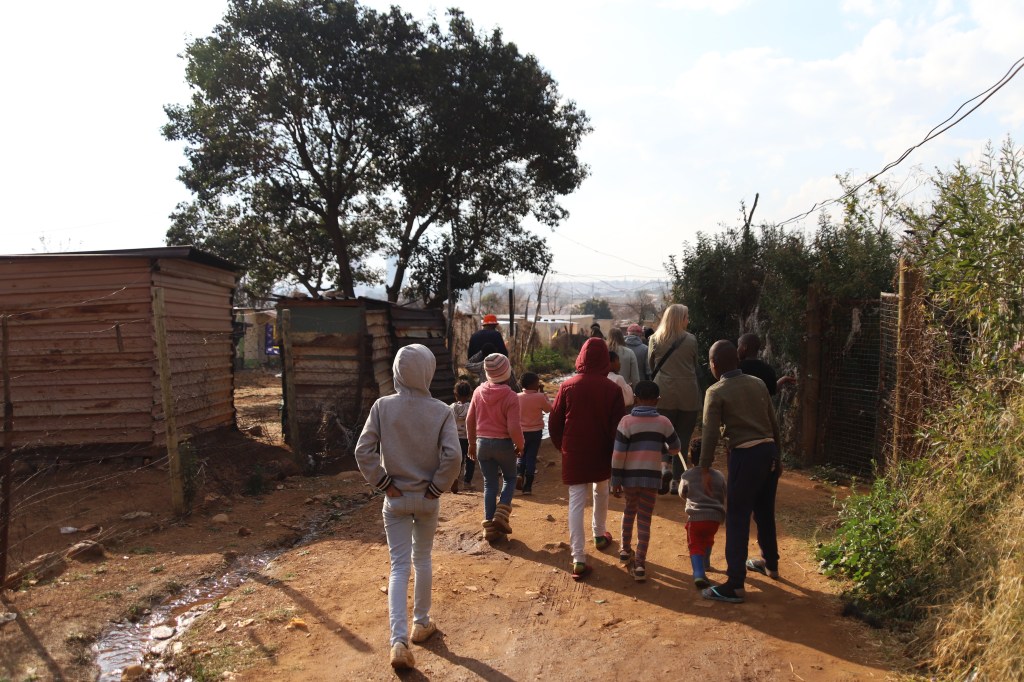
It is at this point that I would like to say that the bulk of my preconceived notions of how the local experience would manifest went completely out the window. We were greeted by a group of children who basically just wanted to meet us. I think that I thought that they would see us as looking at them as a spectacle. I’d suggest that the reality was quite the contrary as we were, in fact, the spectacle. This is a theme that will continue throughout the trip (I’m not clairvoyant, just delayed in catching up on posts)

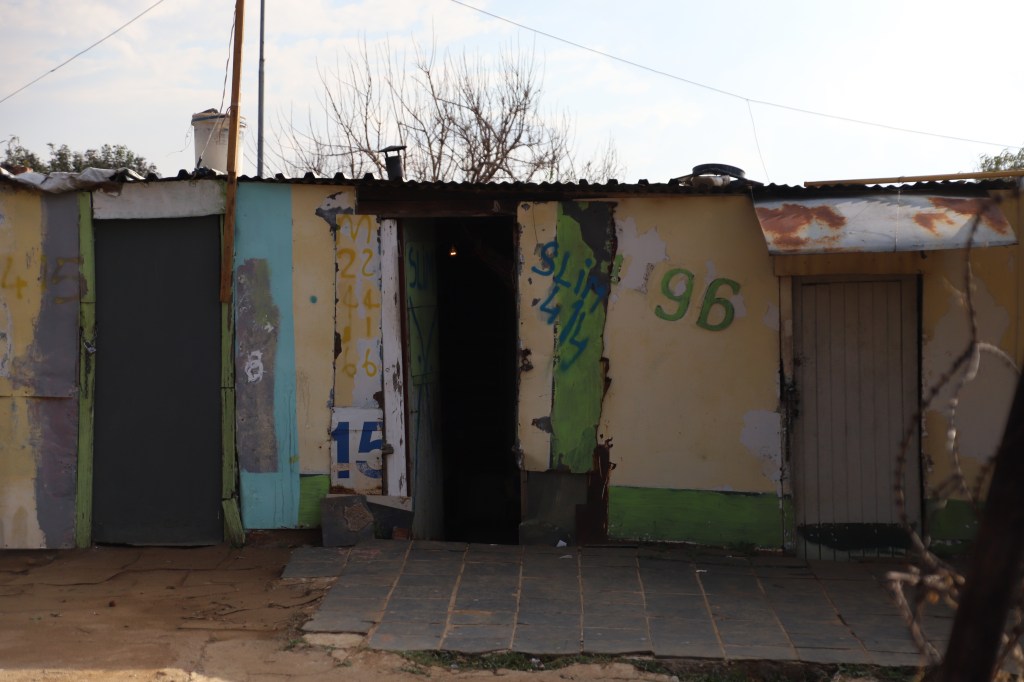
There are two ways to look at a place like this. One, it’s a hovel. Impoverished, meager, base. To a certain extent, this is part of the assessment. That said, however, the houses are neat, the yards are organized, and most things have their place.

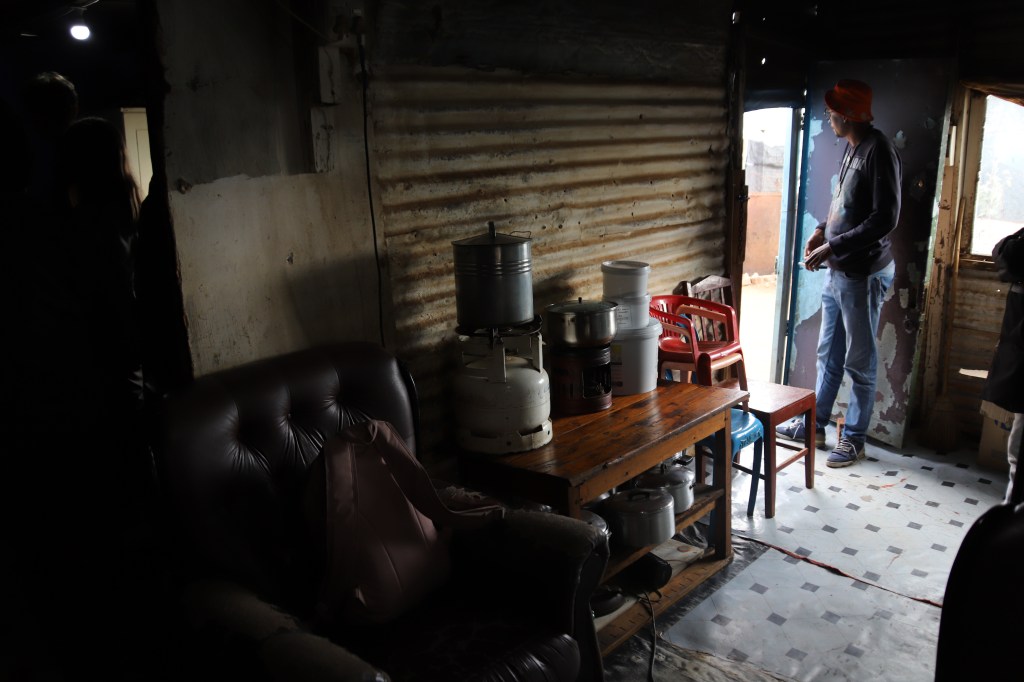
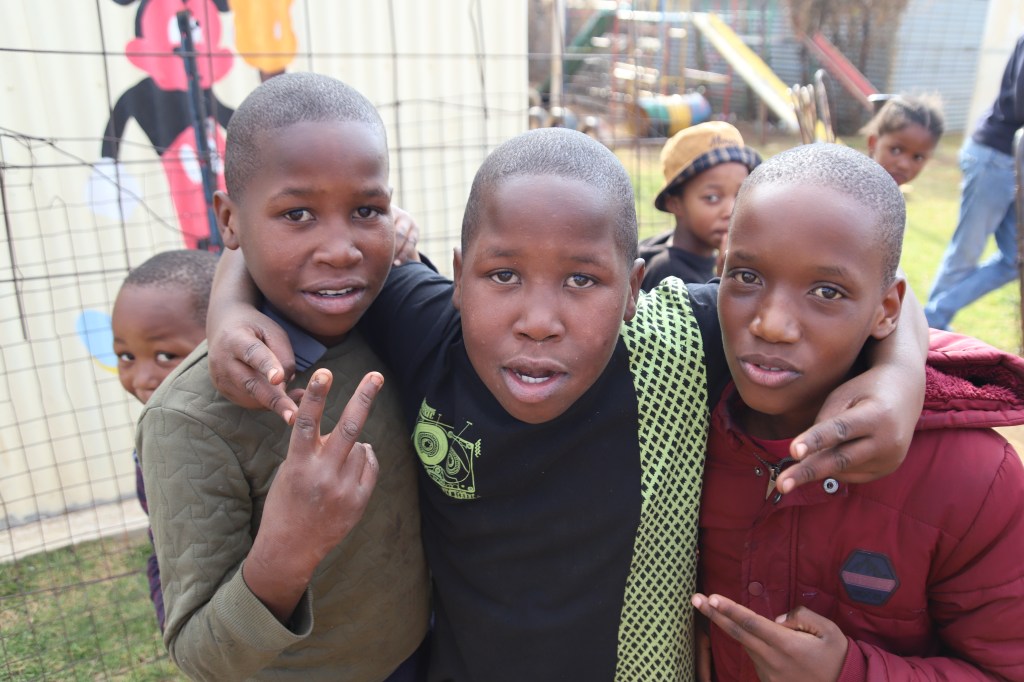
I can say this with certainty that the children are fun and full of life. I am in no way assessing the difficulty or easy of their existence, only noting their friendliness and smiles.
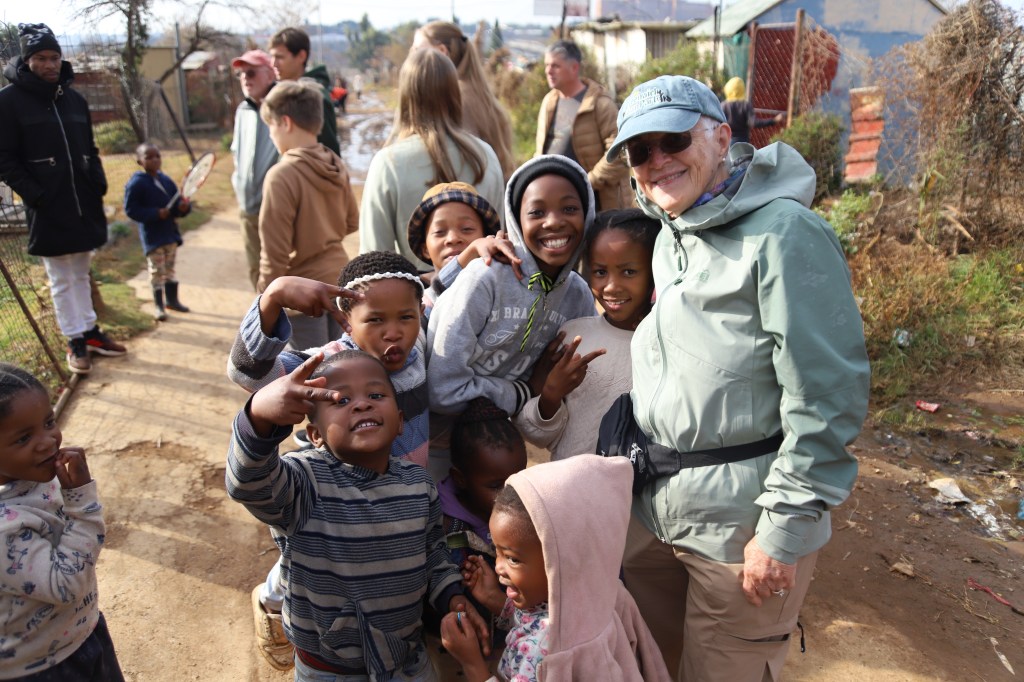

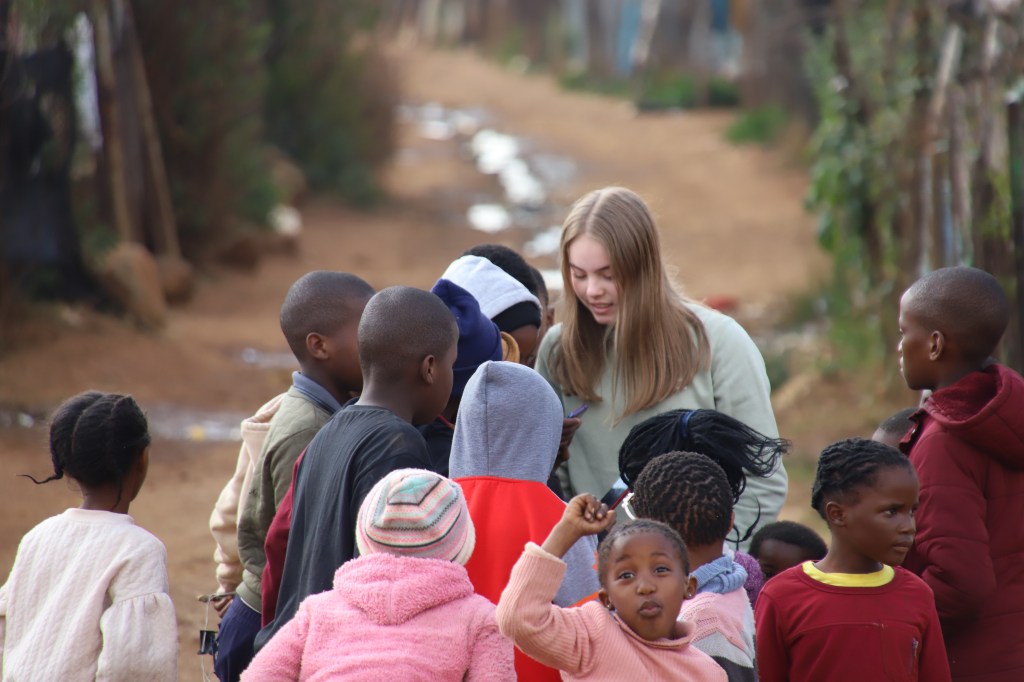
I could keep adding pictures, so I will.

Moving on, our next stop would be the house of Winnie Mandela, wife of Nelson Mandela. The house itself has become a museum. I’m not going to write more than a cursory bit on this, not out of disrespect for the work of the Mandela family, but because my paltry visit to a museum for an hour hardly makes me an authority in this area. I did find the bullet holes in the side of the building a poignant reminder of how complex and difficult the struggle was for Black South Africans through the days of apartheid.


The closer spot probably hit the hardest, at least for me. It was a visit to the memorial of the Soweto Student Uprising of June 16, 1976. It was a student protest of the use of Afrikaans in equal parts to English as the language of instruction in South Africa. The students saw this as a representation of apartheid. It is estimated that 20,000 students participated and between 176 and over 700 were killed, depending on the source. Today, students march the same section of the street each year on June 16 to commemorate the event. Here is a link for further information. https://en.wikipedia.org/wiki/Soweto_uprising
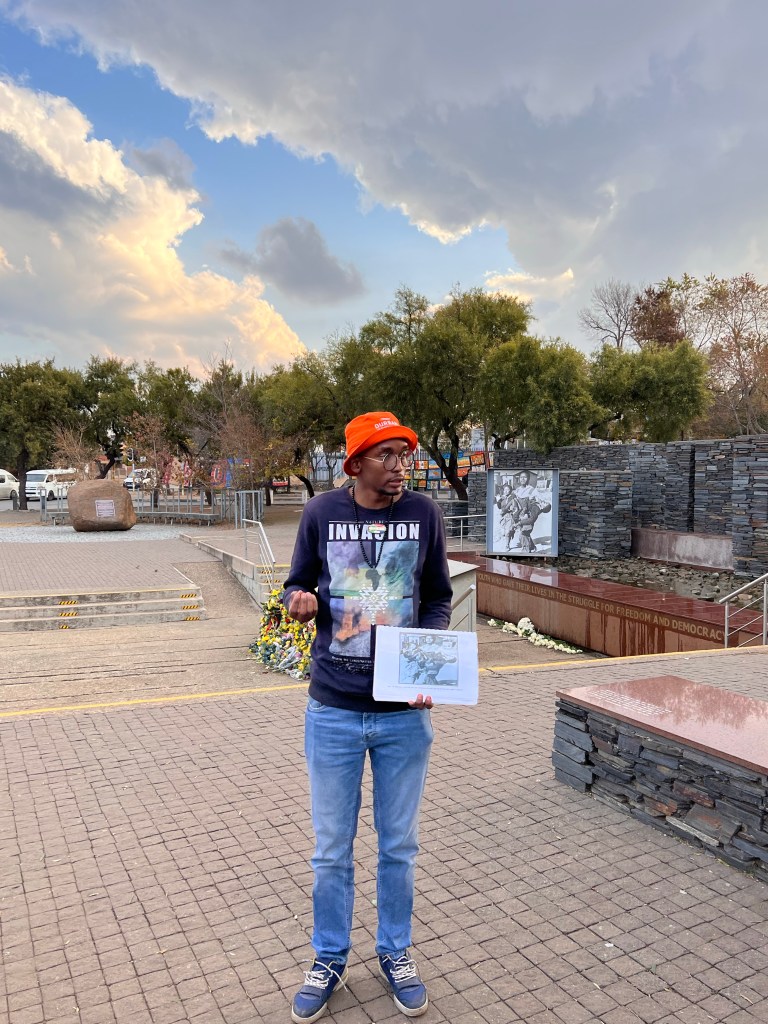

Needless to say, it was a brilliant few hours. I would suggest that it would set the tone for the trip in terms of our deeper learning of this amazing part of Africa.
In keeping with the tone-setting vibe, our final stop before getting an early night’s sleep would be the hotel restaurant.

Here, we discovered a new love, deepening our blossoming romance with southern Africa. Enter the rump roast.
 Safari in the Crucible of Humanity